Introduction: The Misrouted Signal
Most people who get frequent headaches have a theory about what is causing them. Screen time. Stress. Dehydration. Poor sleep. Migraine. What is far less commonly considered, and far less commonly assessed, is the neck.
A significant proportion of recurring headaches do not originate in the head at all. They originate in the joints, discs, and muscles of the upper cervical spine, and are experienced as head pain because of how the nervous system processes signals from the neck and the head through the same neurological pathway. The brain receives a pain signal that began in the neck and reads it as though it began behind the eyes or across the temple.
This is the Misrouted Signal: the process by which pain generated in the cervical spine is carried along a shared neural pathway into the head, where it is felt, described, and treated as a head problem, when the structure actually driving it has never been examined. It is a well-documented phenomenon in the headache and pain literature, and it has a name of its own, cervicogenic headache, though it remains one of the most consistently underdiagnosed headache types in clinical practice.
Understanding the Misrouted Signal changes what a headache assessment should include. It explains why treatments aimed at the head so often fail to resolve headaches that are, in fact, being generated somewhere else. And for the many people who have been told their headaches are simply stress or screen fatigue, it offers a more precise explanation and a considerably more treatable one.
What a Cervicogenic Headache Actually Is
Cervicogenic headache is defined clinically as unilateral head pain that originates in the bony structures or soft tissues of the neck and is referred into the head (Ailani et al., 2024). Unlike migraine or tension-type headache, which are classified as primary headache disorders arising from the head itself, cervicogenic headache is a secondary headache disorder. The head is where the pain is felt. The neck is where the pain is generated.
The mechanism behind this referral pattern is anatomical. The upper three cervical nerves, C1 through C3, carry sensory information from the joints, discs, and muscles of the upper neck into a structure in the brainstem called the trigeminocervical nucleus. This same structure also receives sensory input from the trigeminal nerve, which supplies sensation to the face, forehead, and scalp. Because signals from the neck and signals from the head converge on the same neurological relay point, the brain can struggle to distinguish where a given pain signal actually originated. A nerve signal that began in an irritated joint at the top of the spine can be interpreted as pain in the temple, the eye socket, or the back of the skull (Vincent, 2010; Ailani et al., 2024).
This convergence is not a rare quirk of anatomy. It is the standard wiring of the upper cervical and trigeminal systems, which is precisely why cervicogenic headache is not a fringe diagnosis but a recognised, formally classified headache disorder with its own diagnostic criteria under the International Classification of Headache Disorders (Headache Classification Committee of the International Headache Society, 2018).
The Anatomy Behind the Misrouted Signal

The Joints Most Often Responsible
Several structures in the upper cervical spine are capable of generating the Misrouted Signal, but one joint accounts for the large majority of cases. The C2-3 zygapophyseal joint, the small facet joint between the second and third cervical vertebrae, is implicated in approximately seventy percent of cervicogenic headache presentations (Bogduk & Marsland, 1988). The upper cervical intervertebral discs, the C3-4 facet joints, and the lower cervical facet joints are also recognised contributing sources, though less frequently.
These joints sit at a part of the spine that carries a disproportionate mechanical load. The upper cervical segments are responsible for a large share of the neck’s total rotation and are under near-constant low-level tension from the weight of the head, particularly when the head sits forward of its neutral position for extended periods, as it does during most desk-based and screen-based work.
The Muscles That Compound the Problem
Joint dysfunction rarely occurs in isolation. In people with cervicogenic headache, the deep neck flexors, the small stabilising muscles at the front of the upper neck, are frequently weak and underactive, while the more superficial neck flexors compensate by working harder than they are designed to (Satpute et al., 2024; Jull et al., 2002). At the back of the neck, the suboccipital muscles, which sit at the base of the skull and directly influence upper cervical joint position, often show reduced function, while the upper trapezius, levator scapulae, and scalene muscles become tight and develop trigger points that further irritate the same neurological pathway feeding the Misrouted Signal.
This combination, an underactive deep stabilising system and an overactive superficial compensatory system, is a pattern physiotherapists see repeatedly in people with cervicogenic headache, and it is directly addressable with targeted, progressive exercise rather than rest or medication alone.
How to Tell It Apart from Migraine and Tension-Type Headache
Because the pain is felt in the head, cervicogenic headache is frequently assumed to be migraine or tension-type headache, and treated with the same medications and lifestyle advice, often without lasting benefit. Several clinical features distinguish it.
Cervicogenic headache is typically side-locked, meaning it consistently affects the same side of the head rather than alternating or occurring bilaterally, and it tends to spread from the back of the head forward toward the temple and eye rather than beginning at the front (Vincent, 2010). Neck movement, sustained awkward neck posture, or firm pressure over the upper cervical joints and suboccipital muscles reliably provokes or worsens the pain, and cervical range of motion is measurably reduced (Headache Classification Committee of the International Headache Society, 2018). Migrainous features such as nausea, sensitivity to light, and sensitivity to sound can occur alongside cervicogenic headache but are typically milder than in true migraine, and ipsilateral shoulder or arm discomfort on the same side as the headache is a common accompanying feature that is uncommon in migraine or tension-type headache (Vincent, 2010; Ailani et al., 2024).
The formal diagnostic criteria reflect this. A cervicogenic headache diagnosis requires clinical or imaging evidence of a cervical spine disorder capable of producing headache, together with at least two of the following: a clear temporal relationship between the onset of the neck disorder and the onset of the headache, headache that improves or resolves as the neck disorder is treated, cervical range of motion that is reduced with pain significantly worsened by provocative movement testing, and headache that is abolished following diagnostic anaesthetic blockade of the cervical structure in question (Headache Classification Committee of the International Headache Society, 2018). A specific clinical assessment, the flexion-rotation test, which measures upper cervical rotation while the neck is held in full flexion, has been reported with diagnostic accuracy of eighty-five percent for identifying upper cervical joint dysfunction associated with cervicogenic headache (Hall et al., 2010).
The distinction matters because migraine, tension-type headache, and cervicogenic headache respond to different interventions. A headache that is actually cervicogenic will not meaningfully improve with migraine-specific medication, because the structure generating the pain is never being addressed.
Why Cervicogenic Headaches Are So Consistently Missed
Cervicogenic headache is estimated to affect somewhere between one and four percent of people with recurring headache, with more recent pooled data placing the relative frequency in clinic-based headache populations at approximately three percent (Robinson et al., 2025; Ailani et al., 2024). Given how common recurring headache is as a presenting complaint, this represents a substantial number of people whose headaches have a specific, identifiable, and treatable cervical source.
Several factors explain why the diagnosis is so often missed. Headache assessment in general practice and even in specialist headache clinics is typically focused on the head, with cervical spine examination frequently omitted entirely. Imaging of the neck is not routinely helpful, because degenerative changes in the cervical spine are common in people who have no headache at all, meaning a scan alone can neither confirm nor rule out a cervicogenic cause (Headache Classification Committee of the International Headache Society, 2018). And because the pain is genuinely felt in the head, patients themselves rarely think to mention neck stiffness, previous whiplash, or posture as relevant when describing their symptoms, unless specifically asked.
The result is a pattern seen consistently in physiotherapy clinics: people who have tried multiple headache medications, sometimes for years, without ever having had their cervical spine formally assessed.
Who Is Most at Risk

Cervicogenic headache is not distributed evenly across the population. It is most frequently diagnosed in adults between their thirties and mid-forties, and clinic-based data suggests a skew toward women, though the exact proportion varies considerably across studies and clinical settings (Robinson et al., 2025; Ailani et al., 2024). Occupationally, the strongest and most consistent risk factor is prolonged, static neck posture, the kind produced by extended desk work, laptop and phone use, and screen-based tasks generally. Sustained forward head posture increases the mechanical load on the upper cervical joints and progressively weakens the deep neck flexors while overloading the superficial neck and shoulder muscles, recreating the exact muscular imbalance described above. This is the same underlying pattern behind what is commonly called text neck, and for anyone whose work involves long, uninterrupted stretches at a screen, it is worth treating sustained neck posture as a genuine occupational risk factor rather than an incidental habit.
How Physiotherapy Treats Cervicogenic Headaches
Physiotherapy is considered a first-line intervention for cervicogenic headache, and the evidence supporting it is specific rather than general. It targets the joint, muscle, and movement contributors to the Misrouted Signal directly, rather than managing the head pain that results from them.
Clinical Assessment of the Neck, Not Just the Head
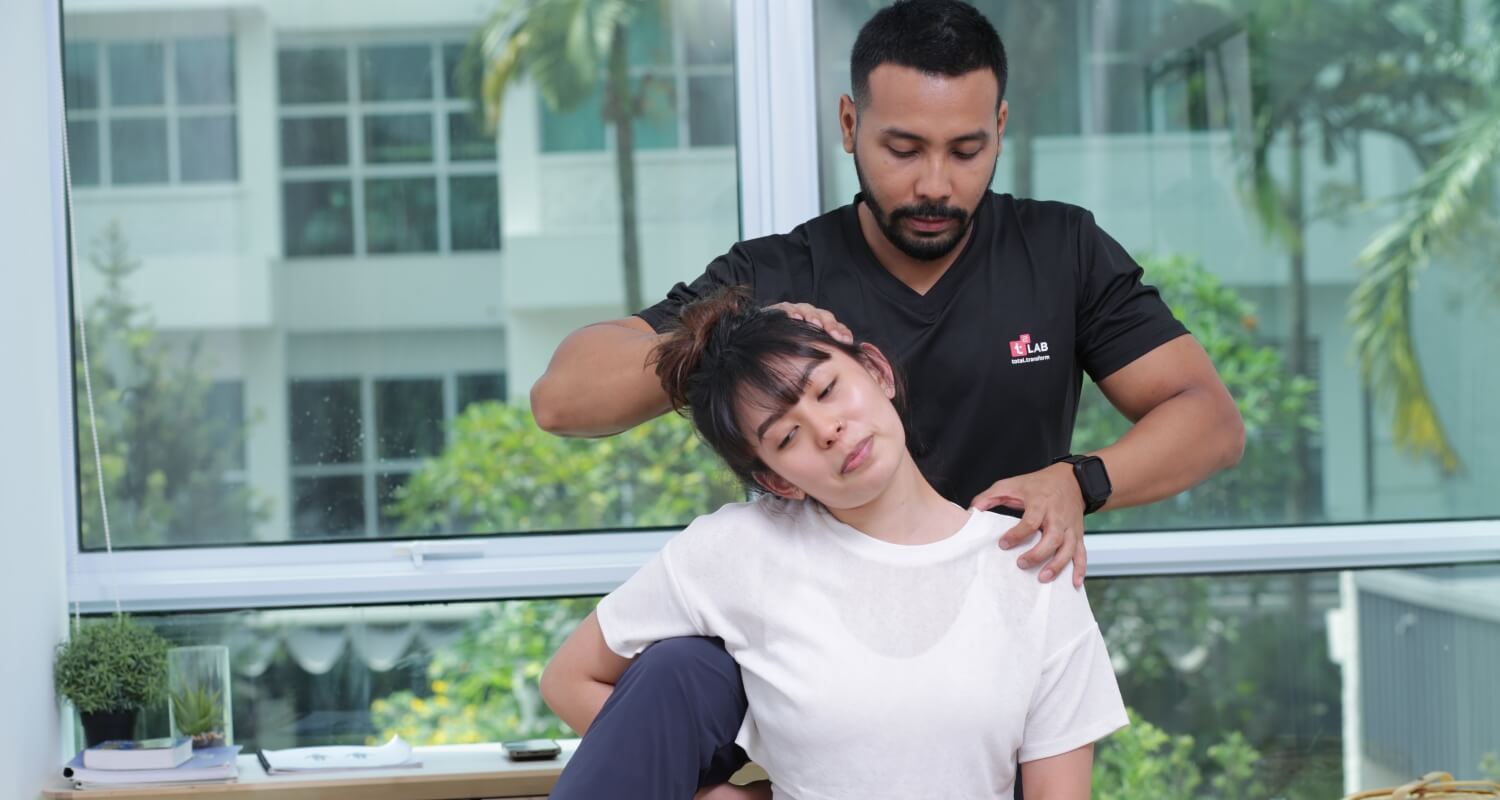
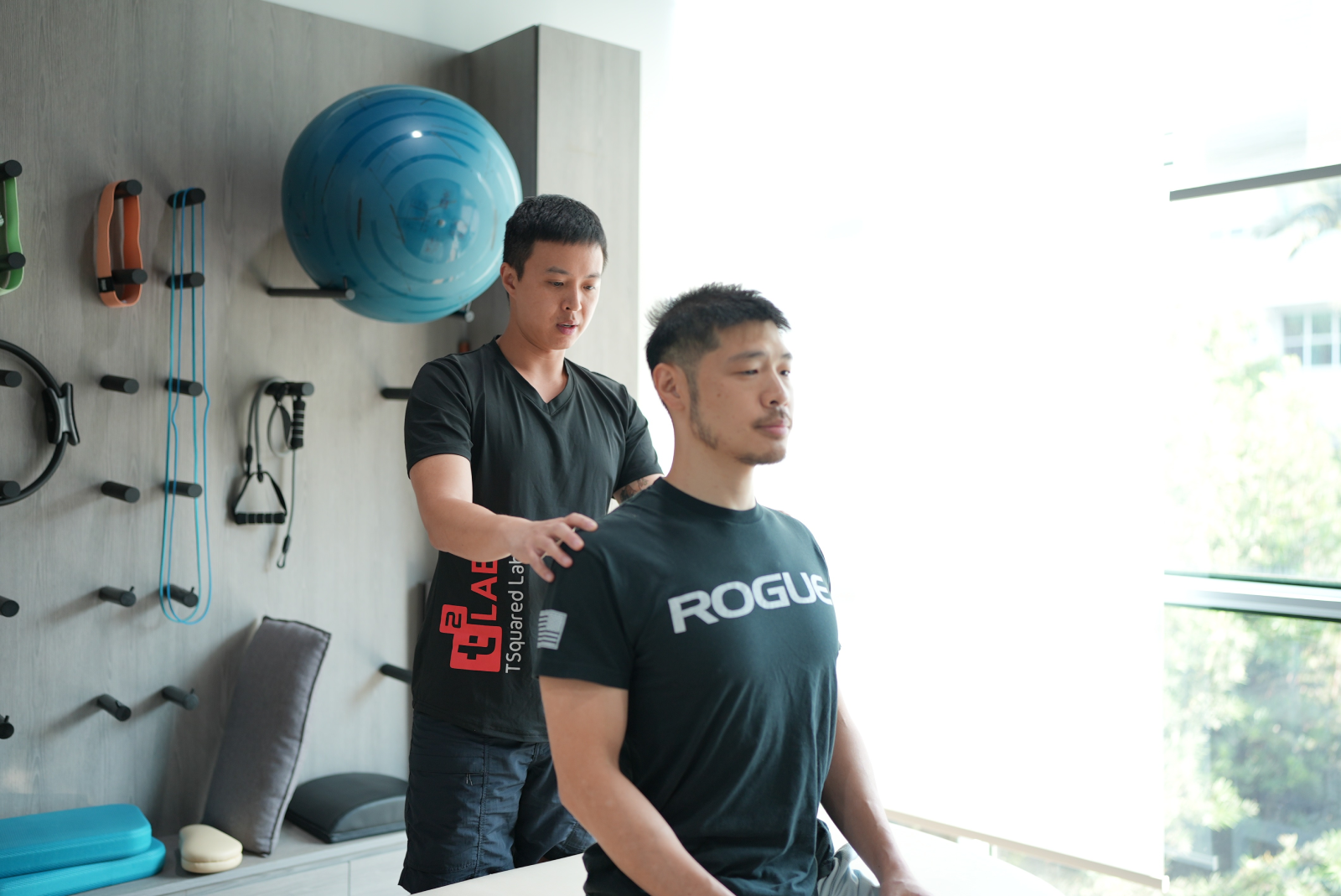
At TSquared Physio, an assessment for recurring headache does not stop at the head. It includes a thorough examination of upper cervical joint mobility, deep neck flexor strength and endurance, posture under load, and the specific movements or positions that reproduce the headache. This is what allows a genuinely cervicogenic headache to be distinguished from migraine or tension-type headache, and it is the starting point that determines whether physiotherapy is likely to help at all.
Manual Therapy for the Upper Cervical Joints
Manual therapy directed at the upper cervical spine, including sustained natural apophyseal glides and joint mobilisation techniques, is one of the most extensively studied interventions for cervicogenic headache. A randomised controlled trial published in the Journal of Physiotherapy found that manual therapy combined with a structured exercise programme reduced headache frequency by more than eighty percent at twenty-six weeks, substantially outperforming both sham manual therapy with exercise and exercise alone, with the sham and exercise-only groups showing no meaningful difference between them (Satpute et al., 2024). A separate systematic review and meta-analysis found moderate-to-large effects in favour of manual therapy for both headache frequency and intensity in the short term, with effects persisting, though at a reduced magnitude, beyond three months (Bini et al., 2022).
Deep Neck Flexor and Postural Retraining
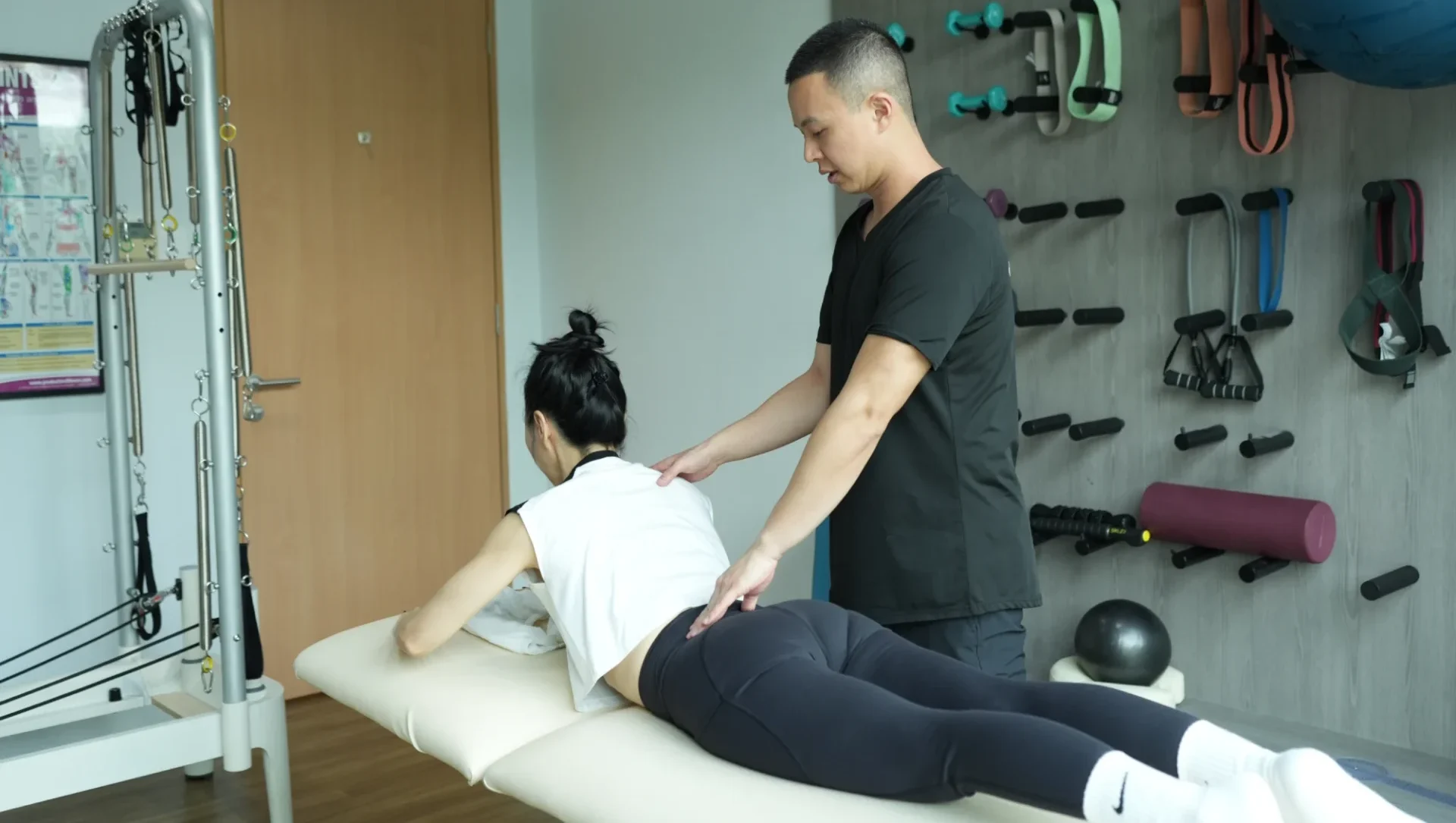
Because deep neck flexor weakness and superficial muscle overactivity are consistent features of cervicogenic headache, targeted strengthening of the deep stabilising muscles, combined with scapular retraining and postural correction, forms a core part of the physiotherapy programme (Jull et al., 2002). Progressive loading of the deep neck flexors, prone scapular retraction work, and active mobility exercises for the cervical spine were part of the exercise protocol shown to meaningfully reduce headache frequency and disability when combined with manual therapy (Satpute et al., 2024).
This exercise component is not incidental to treatment. It is what maintains the joint mobility gained through manual therapy and addresses the muscular imbalance that allowed the upper cervical joints to become irritated in the first place, which i
This exercise component is not incidental to treatment. It is what maintains the joint mobility gained through manual therapy and addresses the muscular imbalance that allowed the upper cervical joints to become irritated in the first place, which is why manual therapy alone tends to produce shorter-lived improvement than manual therapy combined with a structured strengthening programme.
Osteopathic Management of Structural Contributors
Where upper cervical joint restriction or broader postural and structural factors through the neck, shoulders, and thoracic spine are contributing to the Misrouted Signal, osteopathic treatment provides a complementary structural approach that works alongside physiotherapy rather than as a separate pathway. At TSquared Physio, osteopathy and physiotherapy are coordinated within the same clinical programme so that joint mobility work, soft tissue treatment, and progressive strengthening are addressing the same underlying presentation rather than working independently of each other.
Beyond the Clinic: Supporting Recovery Day to Day
Physiotherapy addresses the structural and muscular contributors to cervicogenic headache directly, but what happens between sessions matters. For anyone whose work involves sustained screen time, deliberately breaking up static neck posture through the day, setting screens at eye level, and building in regular movement is a meaningful complement to in-clinic treatment rather than a replacement for it.
Where a headache presentation includes features that fall outside a purely musculoskeletal picture, including headaches with red flag features, a pattern that does not respond as expected to physiotherapy, or a need to rule out other systemic contributors, TSquared Health provides physician-led assessment to complete the clinical picture. General hydration and nutritional adequacy also support musculoskeletal recovery broadly, and for clients managing this alongside other TSquared Physio treatment goals, TSquared Eats can support that nutritional foundation without adding to the logistics of an already busy recovery plan.
TSquared Physio: Treating the Neck, Not Just the Headache

At TSquared Physio, a headache that keeps returning despite medication, rest, and lifestyle changes is treated as a signal worth investigating properly, not a symptom to be managed indefinitely. The Misrouted Signal is not an unusual or difficult-to-treat phenomenon. It is a well-recognised clinical pattern with a clear anatomical basis, a defined set of diagnostic features, and a physiotherapy approach with genuine evidence behind it.
Every client presenting with recurring headache at TSquared Physio receives a full cervical spine assessment as part of that evaluation, because the head is very often not where the answer is found. The programme built from that assessment is specific to the joints and muscles actually driving the presentation, progressive in its loading, and coordinated with osteopathic treatment where structural factors warrant it.
If your headaches keep coming back and nothing aimed at the head has resolved them, the next place to look is the neck.
Book an appointment with TSquared Physio.
FAQs
Can a headache really come from my neck?
Yes. This is a recognised, formally classified headache type called cervicogenic headache. Pain signals from the joints, discs, and muscles of the upper neck travel along a shared neurological pathway with pain signals from the head and face, so pain that begins in the neck can be felt as head pain. It is a well-documented mechanism, not an unusual or unproven one.
How is a cervicogenic headache different from a migraine?
Cervicogenic headache is typically one-sided and consistently affects the same side of the head, tends to spread from the back of the head forward, and is reliably worsened by neck movement, sustained neck posture, or pressure over the upper cervical joints. Migraine is more often accompanied by pronounced nausea, light sensitivity, and sound sensitivity, and is not typically provoked by neck movement or posture in the same reliable way. A clinical assessment of the cervical spine is the most accurate way to tell the two apart.
Why has nobody checked my neck before for my headaches?
Headache assessment, particularly in general practice, is often focused entirely on the head, with cervical spine examination frequently left out unless specifically requested. Because the pain is genuinely experienced in the head, it is easy to overlook the neck as a contributing structure unless a clinician is specifically assessing for it.
Can physiotherapy actually help with headaches, or only with neck pain?
Physiotherapy directly targets the joint restrictions and muscular imbalances that generate cervicogenic headache, not just neck stiffness. Clinical trials have found that manual therapy combined with structured exercise produces substantial and lasting reductions in headache frequency, intensity, and headache-related disability, not only improvements in neck symptoms.
What does a physiotherapy assessment for headaches actually involve?
It includes an examination of upper cervical joint mobility, deep neck flexor strength and endurance, posture under everyday load, and the specific neck movements or positions that reproduce your headache. This is what allows a genuinely cervicogenic headache to be identified and distinguished from other headache types.
Is desk work actually a risk factor for this type of headache?
Yes. Prolonged, static neck posture from desk work, laptop use, and extended screen time increases mechanical load on the upper cervical joints and contributes to the deep neck flexor weakness and superficial muscle overactivity commonly seen in cervicogenic headache. This is the same underlying pattern associated with text neck.
How long does physiotherapy take to work for cervicogenic headache?
In clinical trials, a structured programme of manual therapy combined with exercise, delivered over roughly four weeks, produced significant reductions in headache frequency within thirteen weeks, with the greatest improvement recorded at twenty-six weeks. Individual timelines vary depending on how long the pattern has been present and how consistently the exercise component is maintained.
Should I see a physiotherapist or a doctor first?
If your headaches are new, severe, or accompanied by symptoms such as fever, vision changes, weakness, or confusion, seek medical assessment first to rule out other causes. For recurring headaches that have already been evaluated medically without a clear head-based cause identified, a physiotherapy assessment of the cervical spine is a reasonable and evidence-supported next step.