

Of all the things a nutritionist might nag you about, fibre is the quietest and the most overlooked. It is not a trendy macronutrient, it does not come with a supplement aisle of its own, and almost nobody tracks it the way they track protein or calories. Yet it is one of the few dietary measures with a genuinely strong and consistent link to long-term health, and most Singaporeans are not getting enough of it.
The shortfall is not dramatic, which is exactly why it goes unnoticed. It is a small, steady gap between what we eat and what our bodies would do best on, and it has been widening, not closing, as diets become more refined. This article explains what that gap is, why it matters more than its low profile suggests, and ten practical fixes that close it without overhauling the way you eat.
The Fibre Gap
Here is the gap, in numbers. Singapore’s recommended fibre intake is 20 grams a day for women and 26 grams a day for men (Health Promotion Board). The most recent national survey figure put the average adult intake at around 23.7 grams a day, down from 24.8 grams a few years earlier (Health Promotion Board, National Nutrition Survey 2010). That average already sits below the target for men, and it has been drifting downward rather than up.
The gap looks larger still when you set it against the health evidence rather than the minimum recommendation. The most comprehensive review of the subject, pooling decades of studies, found that the greatest health benefit appears at intakes of around 25 to 29 grams a day, with more still appearing above that (Reynolds et al., 2019). Measured against that, the average Singaporean is not just short of the local target but short of the amount the strongest evidence links to the best outcomes. We call this the Fibre Gap: the quiet, widening distance between the fibre we eat and the fibre our bodies would thrive on. It does not announce itself, and that is precisely why it persists.
Why the Gap Matters More Than It Looks
Fibre is easy to dismiss because its benefits are undramatic and long-term rather than immediate. But the evidence behind it is unusually strong for a single dietary factor. The same large review found that higher fibre intake was associated with meaningfully lower risk of type 2 diabetes, coronary heart disease, and colorectal cancer, and that each additional 8 grams a day was linked to a further reduction in risk (Reynolds et al., 2019). In the clinical trials it pooled, higher fibre intake was also associated with lower body weight, total cholesterol, and blood pressure.
The mechanisms are varied, which is part of why fibre does so much. It slows the absorption of sugar, which steadies blood glucose. It feeds the gut bacteria that support digestion and a healthy gut lining. It adds bulk and slows the stomach, which supports fullness and appetite control. And it helps keep bowel movements regular, which matters in a country where chronic constipation is common. None of these is a dramatic overnight effect. Together, sustained over years, they are one of the best long-term investments a diet can make.
The 10 Fixes

Closing the Fibre Gap does not require a new diet or a cupboard of supplements. It is mostly a series of small swaps, each adding a few grams, that add up to the target without much effort. Here are ten that fit the way people actually eat in Singapore.
1. Mix brown rice into your white
Switching entirely to brown rice is a big jump for most palates. Mixing even half and half, or starting at a quarter brown, adds fibre to the dish you eat most often while you get used to the texture. Brown rice and other wholegrains carry several times the fibre of their refined versions.
2. Choose wholemeal over white
Wherever there is a wholemeal option, for bread, wraps, or noodles, it carries more fibre than the white version for the same portion. It is one of the easiest swaps to make permanent, because the dish itself does not change.
3. Keep the skin on
Much of the fibre in fruit and vegetables sits in or just under the skin. Leaving the skin on apples, pears, potatoes, and cucumbers, rather than peeling them, keeps fibre you would otherwise throw away, with no extra effort at all.
4. Add a palm of beans or lentils
Legumes are among the most fibre-dense foods there are. A serving of dhal, a spoon of chickpeas, or beans added to a dish can add several grams at once, and they fit naturally into a lot of local cooking.
5. Ask for extra vegetables at the hawker
A cai png plate with two or three vegetable dishes rather than one, an extra portion of greens with your noodles, or vegetables added to a dish you already order all lift the fibre of a meal you were buying anyway.
6. Eat the fruit, do not drink it
Whole fruit keeps its fibre; juice largely strips it out and concentrates the sugar. Choosing a whole orange over orange juice, or an apple over apple juice, is a direct fibre upgrade and a blood-sugar one too.
7. Start the day with oats or a wholegrain
Breakfast is an easy place to bank fibre early. Oats, wholegrain cereal, or wholemeal toast at the start of the day puts several grams on the board before the harder-to-control meals arrive.
8. Snack on fruit, nuts, or seeds
Swapping a refined snack, biscuits or crisps, for a handful of nuts, some seeds, or a piece of fruit turns a fibre-empty moment into a fibre-positive one, several times a week.
9. Add a vegetable side to one meal a day
A small salad, a portion of ulam, or a side of stir-fried greens with one meal a day is a reliable way to add fibre without rethinking the main dish. One consistent habit beats an occasional big effort.
10. Build it up slowly, and drink more water
This is the fix that makes the others comfortable. A sudden jump in fibre can cause bloating and wind, so add it gradually over a couple of weeks and drink more water as you do, since fibre works best with enough fluid. Done this way, the change settles easily and lasts.
The Singapore Picture
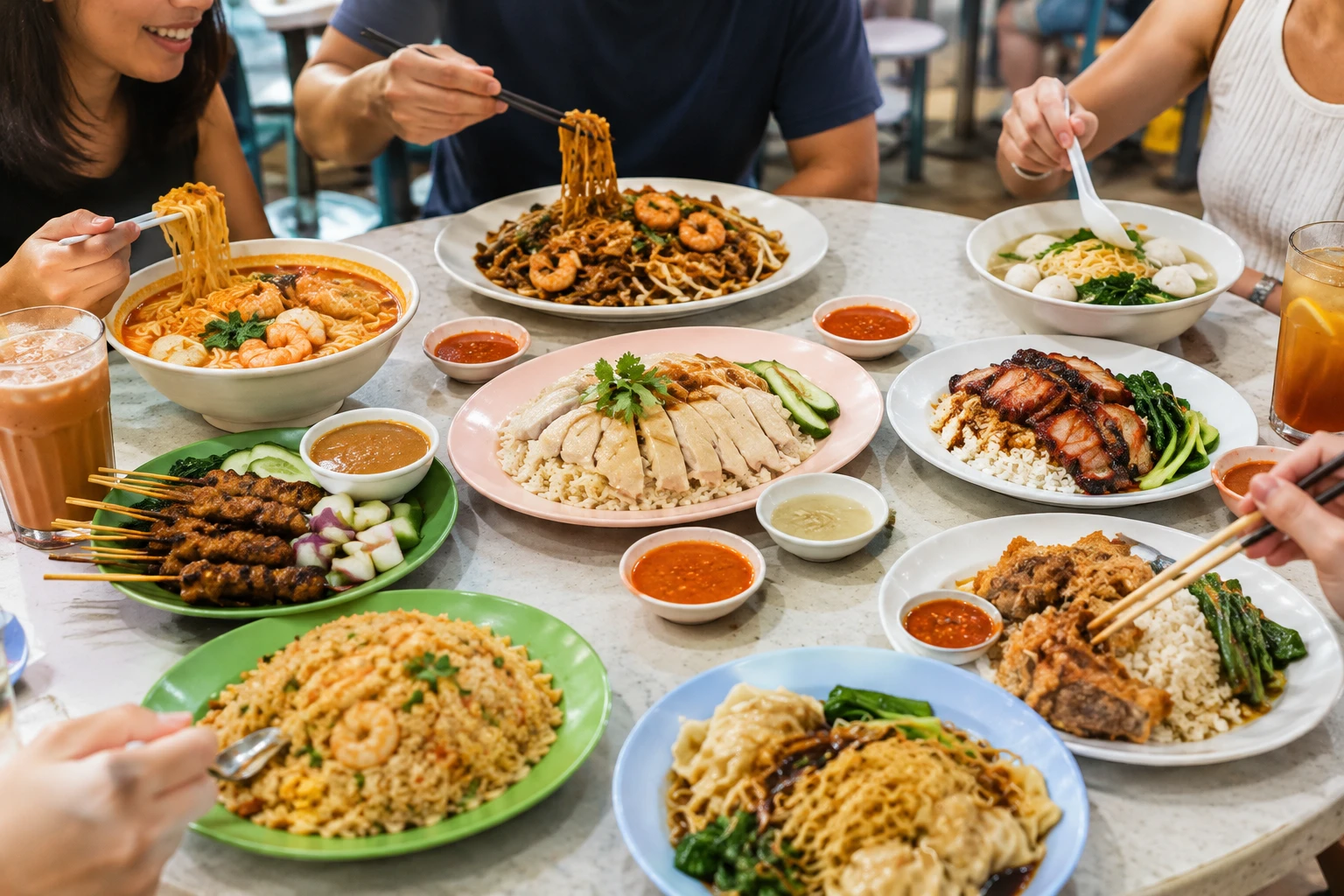
Several features of daily life here nudge the Fibre Gap wider. Refined staples, white rice, white bread, and smooth noodles, are at the centre of many meals, and the convenience foods that fill a busy week tend to be low in fibre by design. Eating out is constant, and restaurant and hawker portions are often built around protein and refined carbohydrate with vegetables as an afterthought. The specific hawker calorie profiles reinforce this picture: a plate of char kway teow delivers 740 to 950 calories with limited vegetable content, chicken rice delivers 600 to 750 calories with cucumber garnish as the only vegetable, and laksa delivers 580 to 700 calories with bean sprouts as the only fibre contributor. Three hawker meals a week built around these dishes leave the fibre target substantially out of reach without specific adjustment.
None of this makes a high-fibre diet difficult here, because the raw materials, fruit, vegetables, wholegrains, and legumes, are everywhere. It simply means the fibre-rich choice usually has to be made deliberately rather than by default, which is what the ten fixes above are designed to make easy.
How TSquared Eats Approaches It
Fibre is a good example of why the quiet, everyday structure of a diet matters more than any single rule. The target is not hard to hit once the defaults are set up well, with wholegrains, vegetables, fruit, and legumes built into the meals you were going to eat anyway, rather than bolted on as a chore. The difficulty is almost always consistency through a busy week, not knowledge.
TSquared Eats is the nutrition arm of the TSquared ecosystem. TSquared Eats provides meals designed by qualified nutritionists and prepared by professional chefs, delivered chilled across Singapore, and available to TSquared Lab clients and non-clients alike, which removes much of the friction between intending to eat well and actually doing so. For someone who knows they fall short on fibre but cannot seem to close the gap in the rush of the week, that kind of consistent, well-built everyday eating is usually what makes the difference.
To build an eating pattern around your situation, you can reach out to the TSquared Eats team at eats@tsquaredlab.com or via WhatsApp at +65 8669 2593.
Order Now with TSquared Eats.
FAQs
How much fibre should I eat a day?
In Singapore, the recommended intake is 20 grams a day for women and 26 grams a day for men (Health Promotion Board). The broader health evidence suggests the greatest benefit appears at around 25 to 29 grams a day, with more still appearing above that (Reynolds et al., 2019), so hitting or slightly exceeding the local target is a sensible aim.
Are most Singaporeans getting enough fibre?
On average, intake falls short of where it ideally sits. The most recent national survey figure put average adult intake at around 23.7 grams a day, below the target for men and below the 25 to 29 gram range the strongest evidence favours, and the figure had drifted downward rather than up (Health Promotion Board, National Nutrition Survey 2010). Around one in five adults had clearly insufficient intake.
Why is fibre so important?
A large review found that higher fibre intake is linked to meaningfully lower risk of type 2 diabetes, coronary heart disease, and colorectal cancer, and to lower body weight, cholesterol, and blood pressure (Reynolds et al., 2019). It steadies blood sugar, feeds the gut bacteria that support digestion, supports fullness and appetite control, and helps keep bowel movements regular. The benefits are long-term rather than dramatic, which is why fibre is easy to overlook.
What are the easiest ways to eat more fibre?
Small swaps work best: mix brown rice into white, choose wholemeal over white, keep the skin on fruit and vegetables, add beans or lentils, ask for extra vegetables at the hawker, eat whole fruit rather than juice, and start the day with oats or a wholegrain. Each adds a few grams, and together they close the gap without a new diet.
Can eating more fibre cause bloating?
A sudden large increase can cause bloating and wind while the gut adjusts. The fix is to build fibre up gradually over a couple of weeks and to drink more water as you do, since fibre works best with enough fluid. Done this way, the change settles comfortably.
Should I just take a fibre supplement?
Whole foods are the better first choice, because they bring fibre together with the vitamins, minerals, and plant compounds that come packaged with it, and the evidence base is built largely on fibre from food. A supplement can have a place in specific situations, but for most people the ten everyday fixes above close the gap more completely.
Does the type of fibre matter?
Yes, somewhat. Different foods provide different mixes of soluble fibre (which forms a gel in the gut and specifically helps with cholesterol and blood sugar) and insoluble fibre (which adds bulk and specifically helps with digestive regularity). A varied intake across wholegrains, vegetables, fruit, and legumes naturally covers both types, which is one of the reasons the ten fixes focus on variety rather than any single food.


