- The Critical Role of Movement in Post-Surgical Healing
- Why Exercise is Integral to Recovery, Not Optional
- The Core Principles Behind Physiotherapy Exercise Prescription
- Common Types of Essential Exercises in Post-Surgical Care
- Tailoring Exercise to Surgery Type
- The Psychological Dimension of Exercise in Recovery
The Critical Role of Movement in Post-Surgical Healing
Surgery, whether orthopedic, abdominal, or related to soft tissues, is just the beginning of the recovery process. What happens in the days, weeks, and months that follow is equally important, and often more so, for determining long-term outcomes.
One of the most common misconceptions is that rest alone will facilitate recovery. While rest has its place, excessive inactivity can slow healing, reduce strength, and limit mobility. This is why physiotherapists play a pivotal role in guiding post-surgical patients back to safe, functional movement. The exercises prescribed are not generic; they are carefully tailored to stimulate tissue repair, restore joint range of motion, rebuild muscle strength, and retrain movement patterns, all while respecting the body’s healing timelines.
Why Exercise is Integral to Recovery, Not Optional
Post-surgical rehabilitation exercises are designed with a delicate balance in mind: providing enough stimulus to promote healing and avoid complications such as stiffness, scar tissue adhesion, and muscle atrophy, without overloading tissues that are still vulnerable.
Immobilisation, while sometimes necessary immediately after surgery, leads to predictable consequences: joint stiffness, reduced circulation, muscle wasting, and loss of proprioception (the sense of joint position and balance). Early, structured movement mitigates these risks, improves circulation, reduces swelling, promotes lymphatic drainage, and encourages collagen fibres to align properly during tissue repair.
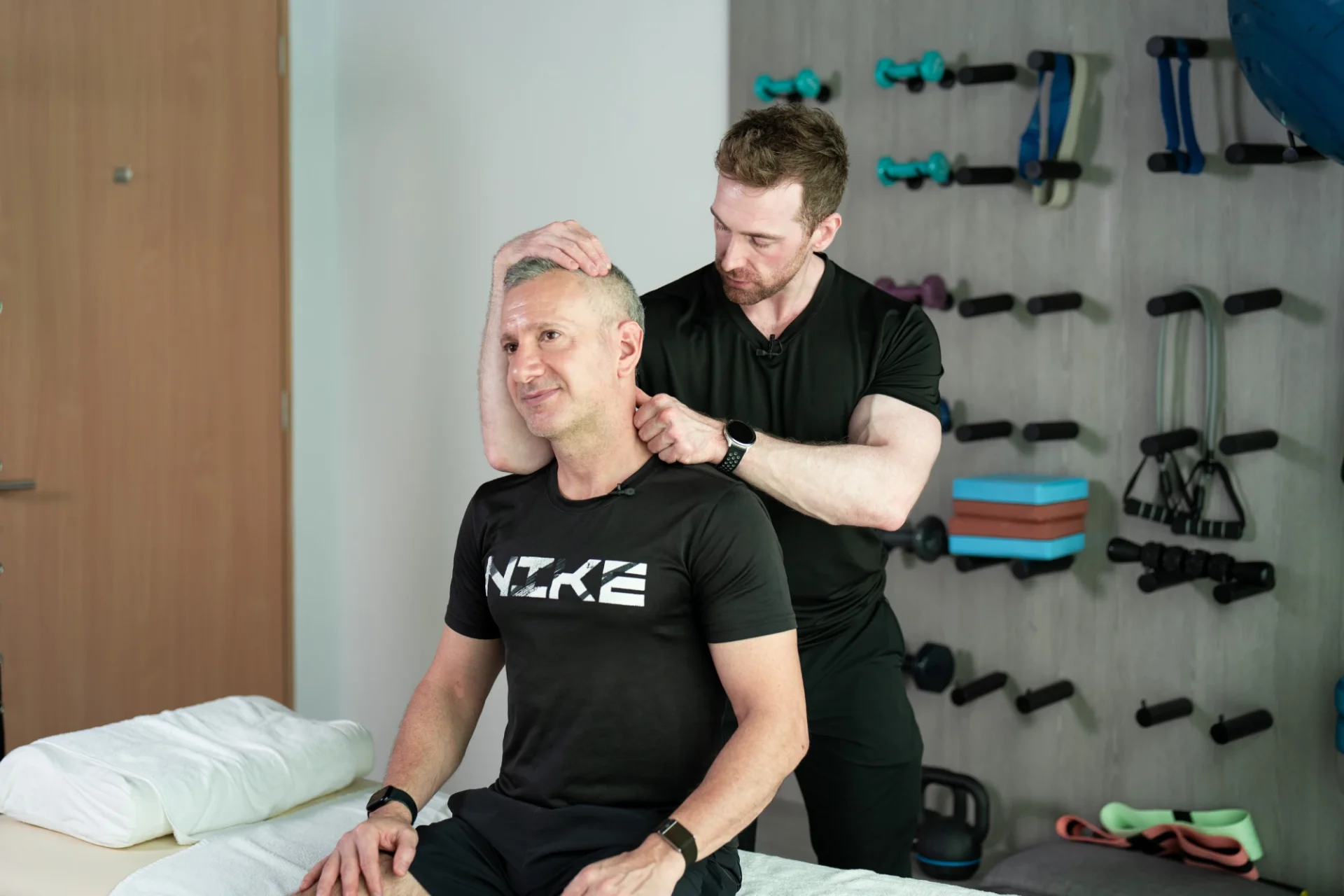
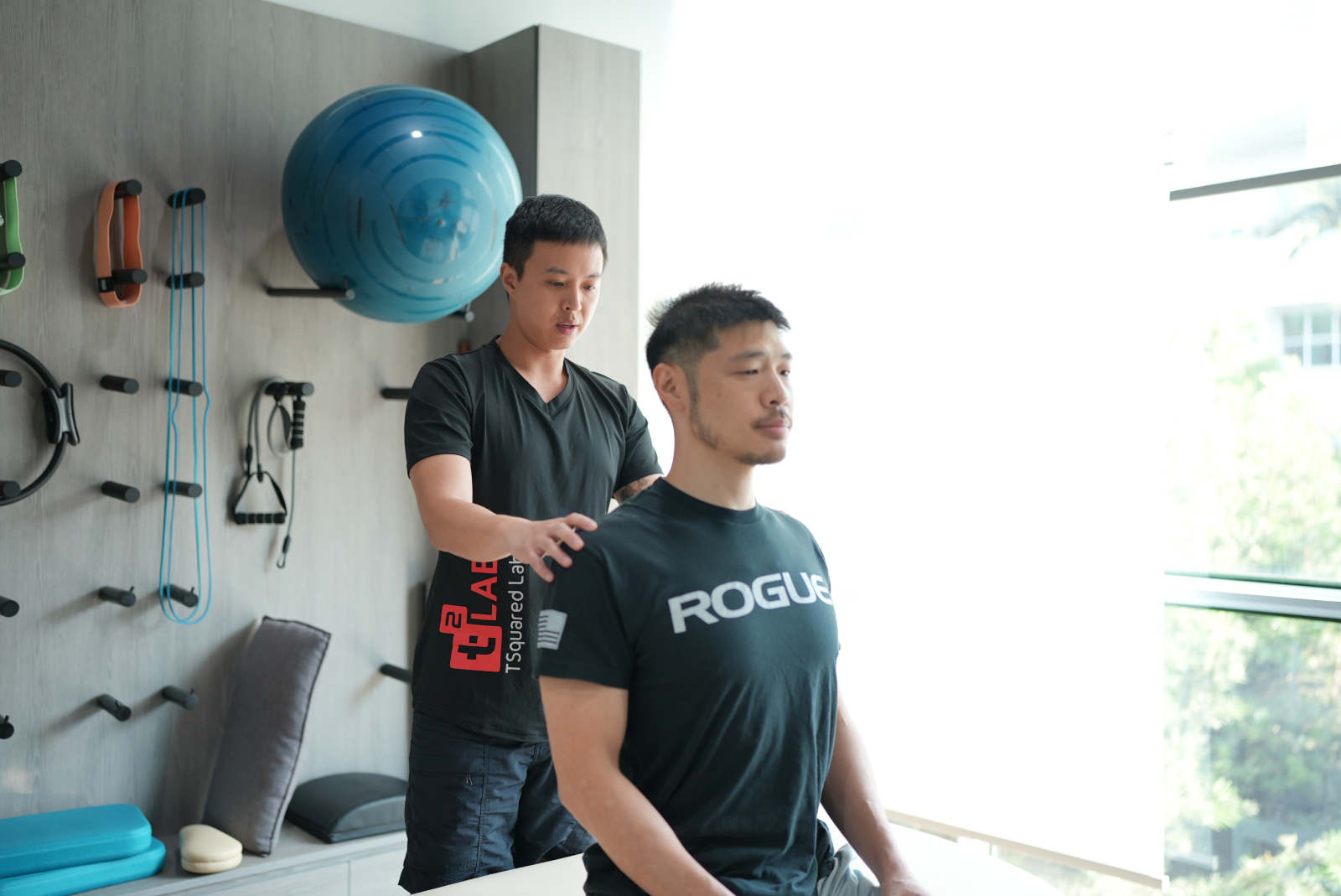
At TSquared Physio, we emphasise that the correct exercise program is not simply about “moving more.” It’s about moving intelligently, with the guidance of a physiotherapist who understands your surgical history, tissue condition, and rehabilitation milestones.
The Core Principles Behind Physiotherapy Exercise Prescription

Physiotherapists select exercises based on several critical factors: the type of surgery, the tissue involved (bone, tendon, ligament, cartilage, muscle), the stage of healing, pain levels, swelling, and the patient’s baseline strength and mobility.
In the initial post-operative phase, exercises focus on gentle mobility, circulation, and breathing. As healing progresses, the focus shifts to restoring joint range of motion, rebuilding strength in supporting muscles, and retraining correct movement patterns.
Progressive loading is a key principle: starting light, with carefully controlled volume and intensity, and gradually increasing as tissues tolerate more demand. This approach not only speeds up recovery but also reduces the risk of re-injury or chronic dysfunction.
Also read: Recovery and Regeneration: Two Most Overlooked Pillars of Progress
Common Types of Essential Exercises in Post-Surgical Care
While every rehabilitation plan is customised, several categories of exercises consistently form the backbone of post-surgical physiotherapy.
Range of Motion (ROM) Exercises:
Restoring flexibility is often a priority, especially after joint surgeries (e.g., knee, shoulder, hip replacements). Gentle, therapist-guided ROM exercises help prevent contractures and maintain joint nutrition, ensuring that scar tissue forms appropriately without excessive restriction.
Isometric Strengthening:
In the early stages, when joints must be protected from excessive load or movement, isometric exercises are invaluable. These involve contracting muscles without changing joint position, allowing patients to maintain muscle activation around healing areas (such as after rotator cuff repair or ACL reconstruction) without compromising surgical repairs.
Closed Kinetic Chain Movements:
Exercises where the extremity is fixed (such as a foot planted on the ground during a mini squat) often come into play in the intermediate recovery phase. These exercises are considered safer and more functional for rebuilding strength and proprioception in the lower limbs.
Balance and Proprioception Training:
After surgeries involving joints or limbs, balance is often impaired. Balance-focused exercises, including single-leg stands or work on unstable surfaces, help retrain neuromuscular coordination, essential for preventing falls and restoring confidence in movement.
Breathing and Circulatory Exercises:

Especially after abdominal or thoracic surgeries, deep breathing exercises support lung expansion and oxygenation while improving core stability. Simple ankle pumps or gentle marching in place promote venous return and help prevent post-operative complications like deep vein thrombosis (DVT).
Tailoring Exercise to Surgery Type
Each type of surgery demands specific considerations.
- After knee surgery, early focus on achieving full knee extension and gradually restoring flexion is key, along with quadriceps activation exercises.
- After shoulder surgery, restoring passive range of motion before active motion, protecting rotator cuff integrity, and avoiding compensatory neck and scapular patterns are critical.
- After spinal surgery, rebuilding core stability while respecting load tolerance is central, alongside posture retraining.
- After abdominal surgery, exercises must respect tissue healing timelines but also prevent postural collapse and reduce the risk of deconditioning.
In every case, progression is individualised, and exercises that are appropriate for one person may be contraindicated for another.
The Psychological Dimension of Exercise in Recovery

Movement is not just physical therapy; it is psychological therapy too. Post-surgical patients often experience fear of movement (kinesiophobia), loss of confidence, and uncertainty about how far to push themselves. A structured physiotherapy program, with exercises delivered in a safe, supervised environment, helps reduce fear, builds trust in the healing process, and improves adherence to recovery plans.
Final Thoughts
Exercise is the linchpin of post-surgical recovery, not an afterthought, but an essential part of the healing process itself. The right exercises, at the right time, prescribed and supervised by a skilled physiotherapist, can accelerate healing, reduce complications, improve function, and restore quality of life.
At TSquared Physio, we approach post-surgical care holistically. We understand that no two recoveries are alike, and our programs reflect the individual’s surgery, condition, and goals, integrating strength, mobility, balance, and confidence at every stage of recovery.
Whether you are recovering from orthopedic surgery, spinal procedures, or soft tissue repairs, our team is here to guide you safely, progressively, and confidently back to movement that lasts, because rehabilitation isn’t just about recovery; it’s about resilience.
Also read: Understanding the Stages of Rehabilitation