Clinical Pilates at TSquared Physio: A Physiotherapy-Led Approach
Most people who have heard of Pilates have encountered it as a group fitness class. A studio environment, a reformer or a mat, an instructor leading a sequence of exercises. There is nothing wrong with that version of Pilates. For many people, it is a useful general fitness practice.
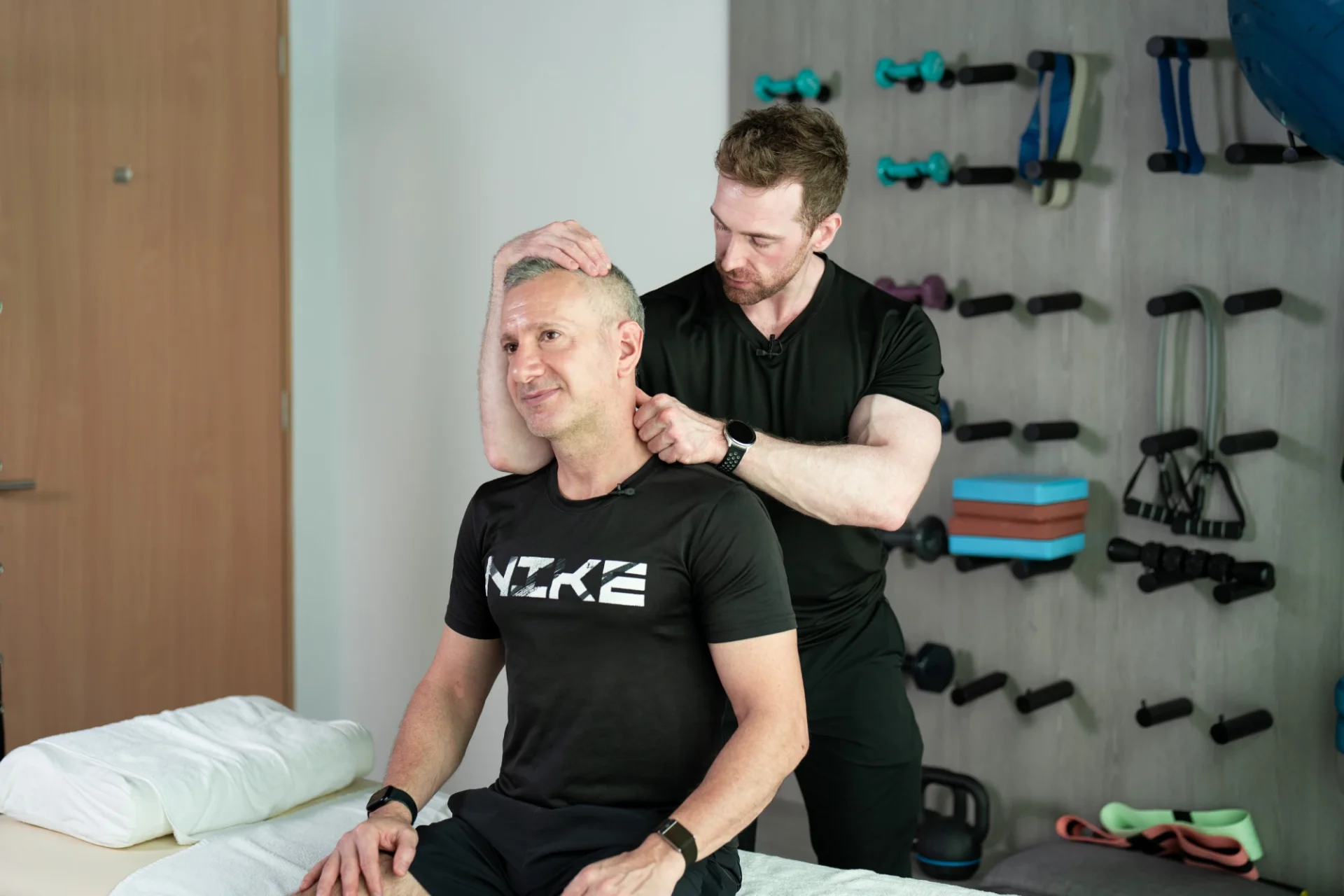
Clinical Pilates is a different discipline. It uses the same equipment and shares the same movement principles, but it is prescribed and supervised by a qualified physiotherapist, individually programmed for the person doing it, and built around a clinical assessment of what their body actually needs. The exercises selected, the loads applied, the progressions chosen, and the modifications made are all clinical decisions, not class plans.
At TSquared Physio, clinical Pilates is one of the tools the team uses inside a broader rehabilitation, recovery, or performance programme. It is not marketed as a standalone studio offering. It is an integrated part of how the physiotherapy service works for the clients it is appropriate for.

What Clinical Pilates Actually Is
Clinical Pilates draws on the same foundational principles as traditional Pilates: precise, controlled movement; deep core engagement; breathing coordination; spinal alignment; and progression through deliberate, supervised practice. The difference is in how those principles are applied.
In a clinical setting, every session begins with the physiotherapist’s understanding of the client’s specific presentation. That might be a diastasis recti following pregnancy, a chronic low back condition, a post-surgical recovery, a movement restriction limiting athletic performance, or a chronic pain condition that has not responded to other approaches. The exercises chosen are the ones that address that specific picture. The intensity and progression are calibrated to what the client’s tissues can currently tolerate. The modifications are clinical adjustments, not generic substitutions.
This is the distinction that matters. Studio Pilates teaches an exercise. Clinical Pilates prescribes one.
Where Clinical Pilates Fits in a Rehabilitation Programme
Clinical Pilates earns its place in a programme when its movement principles support the specific clinical goal the physiotherapist is working toward. Several settings where it is particularly useful:
Postpartum recovery. The slow, controlled, breath-coordinated movement central to Pilates is well-suited to early postpartum rehabilitation, where the priority is restoring deep core function and pelvic floor coordination rather than chasing intensity. Used as part of a physiotherapy-led postpartum programme, clinical Pilates can support the recovery of the abdominal wall and pelvic floor in ways that high-impact training in the same period would not.
Chronic low back conditions. Many chronic back presentations involve poor recruitment of the deep stabilising muscles of the lumbar spine, and over-reliance on more superficial musculature that fatigues and contributes to recurring pain. Clinical Pilates targets the deep stabilisers specifically, with controlled loading that builds capacity without provoking symptoms. The evidence supporting core-stability-based exercise for chronic low back pain is substantial.
Post-surgical rehabilitation. Following spinal surgery, joint surgery, or abdominal procedures, the return to movement typically requires careful, controlled progression. Clinical Pilates provides a structured environment for that progression, with the physiotherapist controlling load, range, and complexity at each stage.
Movement restriction in athletes. For athletes whose performance is limited by movement quality rather than strength or fitness, clinical Pilates can address the specific restrictions identified during assessment, building the controlled mobility and stability that supports sport-specific demands.
Chronic pain conditions. For clients managing chronic pain, the controlled, low-threat nature of clinical Pilates is often a useful entry point into structured movement, particularly when more conventional exercise has been associated with pain flares.
In each of these settings, clinical Pilates is one component of a broader physiotherapy programme, not a standalone treatment. It is selected because it is the right tool for that specific clinical picture, and it is replaced or progressed when the picture changes.

Also read: Pilates for Post-surgery Recovery
How Clinical Pilates Differs from Studio Pilates
The differences matter for anyone weighing whether clinical Pilates is the right entry point.
A studio Pilates class is taught to a group, typically by a qualified Pilates instructor whose training is in Pilates pedagogy. The class follows a structured sequence. Modifications are offered for participants at different levels. The instructor is not making clinical decisions about an individual’s presentation.
Clinical Pilates is delivered one-to-one or in very small clinical settings by a physiotherapist with additional clinical Pilates training. Every exercise is selected for the individual based on their assessment. The physiotherapist is making real-time clinical judgments about load, range, technique, and progression. The session integrates with the rest of the client’s rehabilitation or recovery programme.
Both have value. The choice depends on what the person needs. For someone who is generally healthy and looking for a structured movement practice as part of overall fitness, studio Pilates is appropriate. For someone managing a specific clinical condition, recovering from injury or surgery, working through a postpartum return to movement, or addressing a movement restriction that has clinical implications, clinical Pilates is the right starting point.
Also read: 7 Reasons to Add Pilates to Your Exercise Regime
The Principles That Make Pilates Clinically Useful
Several principles central to Pilates are what make it useful in a clinical setting, when applied with clinical judgment.
Precision over intensity. Pilates emphasises quality of movement over quantity. For clients in rehabilitation, this matches the clinical priority: the movement should be done well before it is done with more load.
Breath coordination. The integration of breathing with movement supports deep core engagement, regulates intra-abdominal pressure, and engages the autonomic nervous system in ways that can be useful for clients managing pain or recovering from surgery.
Spinal awareness. Pilates emphasises spinal position and segmental control, which is directly relevant to most chronic back presentations and to postural conditions that contribute to pain or restriction.
Controlled loading. Pilates equipment, particularly the reformer, allows load to be graded carefully and adjusted in real time, which is useful when the clinical priority is progressive loading without provoking symptoms.
These principles are not unique to Pilates. But the discipline brings them together in a coherent system, which makes Pilates equipment and methodology a useful tool when the clinical brief calls for them.

TSquared Physio’s Approach
At TSquared Physio, clinical Pilates is delivered by physiotherapists with additional clinical Pilates training, as one component of a broader rehabilitation or performance programme. Every client begins with a comprehensive clinical assessment, conducted in a private treatment room, that examines movement quality, joint range, muscular function, load tolerance, and the specific presentation that has brought them to the clinic. Treatment is built around that assessment, not around a class plan.
Where clinical Pilates is part of the appropriate programme, it is integrated with the other components: manual therapy where indicated, targeted strengthening, mobility work, and progressive loading. The Pilates work is selected because it is the right tool for that point in the programme, and it is progressed or replaced when the client is ready for the next stage. It is not the entire programme. It is one part of one.
For clients whose rehabilitation or recovery is progressing well and who are ready to transition into broader strength and conditioning, the work coordinates directly with TSquared Lab personal training. For clients whose recovery is not progressing as expected, a TSquared Health assessment can identify underlying biological factors, including inflammatory and hormonal markers, that may be affecting the response to rehabilitation.
Clinical Pilates is not marketed as a standalone studio offering, because it is not one. It is a clinical tool used by physiotherapists where it fits. For clients for whom it is appropriate, it can be one of the more effective components of a structured recovery or rehabilitation programme.
Also read: Can You Really Build Muscle With Pilates Reformer?
Frequently Asked Questions
What is clinical Pilates, and how does it differ from regular Pilates?
Clinical Pilates uses the same movement principles and equipment as traditional Pilates but is prescribed and supervised by a qualified physiotherapist as part of a clinical rehabilitation or recovery programme. Every exercise is selected based on the client’s specific presentation and assessment. Studio Pilates, by contrast, is taught to a group and follows a structured class plan. Both have value. Clinical Pilates is appropriate when there is a specific clinical condition or rehabilitation goal that requires individual prescription.
Who is clinical Pilates appropriate for?
Clinical Pilates is appropriate for clients managing specific clinical conditions or rehabilitation needs. Common settings include postpartum recovery, chronic low back conditions, post-surgical rehabilitation, chronic pain management, and addressing movement restrictions in athletes. The physiotherapist assesses each presentation and determines whether clinical Pilates is the right tool for the programme.
Do I need a physiotherapy assessment before starting clinical Pilates?
Yes. Clinical Pilates at TSquared Physio is delivered as part of a physiotherapy programme, which begins with a comprehensive clinical assessment. The assessment identifies the specific contributors to the client’s presentation and determines whether clinical Pilates is appropriate, and if so, what the programme looks like.
Is clinical Pilates only for people with injuries or conditions?
Not exclusively, but clinical Pilates earns its place when there is a specific clinical need. For clients who are generally well and looking for a movement practice as part of overall fitness, a studio Pilates class is a more appropriate fit. Clinical Pilates is the right starting point when the priority is rehabilitation, recovery, or addressing a specific movement issue under clinical supervision.
How often is clinical Pilates typically scheduled?
This depends on the individual programme. For clients in active rehabilitation, sessions are often weekly or twice weekly, integrated with other components of the physiotherapy programme. As recovery progresses, frequency typically reduces, and the client transitions to a maintenance phase or to broader strength and conditioning work with TSquared Lab. The physiotherapist determines the appropriate cadence based on clinical goals and progress.
Will clinical Pilates be enough on its own, or will I need other physiotherapy?
In most cases, clinical Pilates is one component of a broader physiotherapy programme rather than the entire treatment. The other components typically include manual therapy where indicated, targeted strengthening, mobility work, and progressive loading. The physiotherapist determines the right combination for each client’s presentation.
Can clinical Pilates help with postpartum recovery?
Yes. The slow, controlled, breath-coordinated movement central to Pilates is well-suited to postpartum rehabilitation, where the priority is restoring deep core function and pelvic floor coordination rather than chasing intensity. As part of a physiotherapy-led postpartum programme, clinical Pilates can support recovery of the abdominal wall and pelvic floor effectively.
Conclusion
Most people encounter Pilates as a group studio class. Clinical Pilates is a different discipline. It uses the same equipment and shares the same movement principles, but it is prescribed and supervised by a qualified physiotherapist, individually programmed for the person doing it, and built around a clinical assessment of what their body actually needs.
At TSquared Physio, clinical Pilates is one of the tools the team uses inside a broader rehabilitation, recovery, or performance programme. It is not marketed as a standalone studio offering. It is selected when it is the right tool for the client’s specific clinical picture, integrated with other components of the physiotherapy programme, and progressed or replaced when the picture changes.
This piece explains what clinical Pilates is, how it differs from studio Pilates, where it fits in a rehabilitation programme, and what makes Pilates equipment and methodology useful in a clinical setting. It is written for anyone weighing whether clinical Pilates is the right entry point for their specific situation.
Written for clients managing rehabilitation, postpartum recovery, chronic conditions, or movement restrictions who are weighing whether clinical Pilates is the right tool for them.
References
Wells C, Kolt GS, Bialocerkowski A (2012). Defining Pilates exercise: A systematic review. Complementary Therapies in Medicine, 20(4), 253-262. https://doi.org/10.1016/j.ctim.2012.02.005
Wells C, Kolt GS, Marshall P, Hill B, Bialocerkowski A (2014). The effectiveness of Pilates exercise in people with chronic low back pain: A systematic review. PLOS ONE, 9(7), e100402. https://doi.org/10.1371/journal.pone.0100402
Yamato TP, Maher CG, Saragiotto BT, Hancock MJ, Ostelo RWJG, Cabral CMN, Costa LCM, Costa LOP (2015). Pilates for low back pain. Cochrane Database of Systematic Reviews, (7), CD010265. https://doi.org/10.1002/14651858.CD010265.pub2
Mazloum V, Sahebozamani M, Barati A, Nakhaee N, Rabiei P (2018). The effects of selective Pilates versus extension-based exercises on rehabilitation of low back pain. Journal of Bodywork and Movement Therapies, 22(1), 198-202. https://doi.org/10.1016/j.jbmt.2017.04.008
Moreira NB, Vagetti GC, de Oliveira V, Conceição JCR, Andrade AS, Gomes PC, Moreira CS, Oliveira CR (2018). Effectiveness of a Pilates-based programme on pelvic floor function and quality of life in postpartum women. Journal of Bodywork and Movement Therapies, 22(4), 1093-1098. https://doi.org/10.1016/j.jbmt.2017.10.001