

Gabriel
Gabriel believes that training should fit a person’s life rather than take it over. He begins with a client’s goal and their real schedule, builds a plan around what they can genuinely sustain, and tracks it closely so that progress is driven by evidence rather than guesswork. In his approach, strength training is the foundation, food and recovery multiply its effect, and consistency beats intensity. He is clear that most of a client’s results happen outside the gym, which is why he coaches that part of their life just as deliberately as the sessions themselves.
This way of working sits naturally within TSquared Lab’s belief in personalised, sustainable transformation. Gabriel does not coach from theory alone. He spent three years inside the same system as a client, where structured, evidence-led coaching changed how he trained, ate and recovered, and he now brings that firsthand understanding to the people he works with. For him, the measure of a good programme is not how hard it is, but whether a client can sustain it and keep progressing long after the first twelve weeks are over.
Gabriel
Personal Trainer
Gabriel believes that training should fit a person’s life rather than take it over. He begins with a client’s goal and their real schedule, builds a plan around what they can genuinely sustain, and tracks it closely so that progress is driven by evidence rather than guesswork. In his approach, strength training is the foundation, food and recovery multiply its effect, and consistency beats intensity. He is clear that most of a client’s results happen outside the gym, which is why he coaches that part of their life just as deliberately as the sessions themselves.
This way of working sits naturally within TSquared Lab’s belief in personalised, sustainable transformation. Gabriel does not coach from theory alone. He spent three years inside the same system as a client, where structured, evidence-led coaching changed how he trained, ate and recovered, and he now brings that firsthand understanding to the people he works with. For him, the measure of a good programme is not how hard it is, but whether a client can sustain it and keep progressing long after the first twelve weeks are over.
Gabriel comes to coaching with a lifetime of training behind him and a professional career that shaped how he works. He competed as a gymnast at an elite level for ten years, and has swum, dived and run long distances throughout his life, alongside consistent weight training. Before coaching, he spent twenty-five years in advertising technology, where working with data, tight deadlines and demanding stakeholders taught him to measure what matters, explain complex ideas simply, and stay consistent when life gets busy. Having lived the corporate schedule himself, he understands exactly what his clients are up against. His focus is on busy professionals, particularly corporate clients who have put their health last, and on people training in their forties and beyond who want to stay strong and capable as they age.
When a new client begins, Gabriel pays close attention to three things. The first is recovery, meaning sleep, stress and workload, since these shape how well anyone is able to train. The second is nutrition, because what and when a person eats influences their results as much as the training itself, something he has felt directly, having watched his own performance fall apart when he under-fuelled. Rather than asking busy people to overhaul their lives overnight, he introduces small, realistic habit changes, one at a time, that compound into meaningful results over weeks and months. The third is how a client feels about the process, not only the numbers. New clients are often busy, nervous and hard on themselves, so he starts with what they can do rather than what they cannot.
He tracks progress through a deliberate mix rather than the scale alone. Training logs capture weights, reps and how hard each set felt, while InBody measurements and photos are taken at the start and every few weeks. Body weight is read as a weekly average rather than a single weigh-in, and he keeps a close eye on how clients feel day to day, including their energy, sleep and stress. When lifts are climbing, measurements are shifting and a client is showing up consistently, he knows the plan is working.
To keep clients motivated, Gabriel makes progress visible. He sets small targets every few weeks, shows clients their own data, and celebrates the wins that never appear on the scale. He plans for difficult weeks as much as good ones, so a missed session is rescheduled rather than abandoned, and he checks in between sessions, because motivation rarely fails in the gym. It tends to fail on a Wednesday night at home.
Gabriel describes his strengths as structure, clarity and honesty. He explains the reasoning behind every plan, so clients always understand what they are doing and why, and he works from data rather than guesswork, telling clients plainly when something is not working. He coaches from a written plan with a training log and a recovery check, which means he teaches only what he practises himself. Years of translating complex information for stakeholders taught him to communicate simply, and having juggled work, family and training for decades, he does not hand out plans that only suit people with unlimited time. His sporting background sets him further apart. Gymnastics, diving and swimming built a strong sense of body awareness and a sharp eye for movement quality, so he is quick to spot a fault in a squat or a press and knows how to cue the fix, while long-distance running taught him the pacing, patience and persistence that clients need to see a twelve-week programme through. At fifty, he is still making progress in his own training, so he understands that stage of life from the inside.
Gabriel’s interests centre on three areas that work together. Strength and muscle building come first, both because it is what he trains for himself and because he views it as one of the best investments a person can make in long-term health and independence. Nutrition and fuelling come next, since training sends the signal but food determines how much of that signal the body can actually use. The third is cardiovascular training, which he is genuinely passionate about. It builds a stronger heart, lowers resting heart rate, and is one of the best predictors of long-term health, while a solid aerobic base also improves recovery between sets and between sessions, so clients can do more quality work. He most enjoys working with busy professionals who have let their health slip, and with clients in their forties and beyond, because it is where he came from and where he feels best placed to help. Looking ahead, he plans to complete a performance nutrition certification and deepen his work in cardiovascular programming, and he is keen to learn more about women’s life stages, including pregnancy, the postnatal period and the stages around menopause, each of which carries specific implications for how a programme is built.
 Certified Personal Trainer from the American Council on Exercise (ACE)
Currently completing certification with Singapore’s National Registry of Exercise Professionals (NREP)
FIT ASIA Personal Trainer Development Program.
FIT ASIA Personal Trainer Essential Skills.
FIT ASIA Functional Tools Coach (kettlebells, battling ropes, functional bags and suspension training)
Gabriel’s own transformation began as a TSquared client. Over three years, he took control of his nutrition and training, lost ten kilograms of body weight and more than ten percent body fat, and moved his health markers, including blood pressure and lipid profile, into healthy ranges. Building muscle raised his energy needs, so he is now able to eat more while staying lean, with a clearer head, sharper focus and far higher energy that continues to fuel his own progress.
Beyond the physical, he is proud of three things that are closely connected. The first is a life lived across three continents, having spent time in the United States, Switzerland, China and now Singapore, and nineteen years in total outside his home country, an experience that shaped how he sees the world. The second is his decision to leave corporate life for coaching, doing the work to become ACE-certified so that he could help others. The third is the healthy lifestyle he has maintained through every move and every job, keeping nutrition and activity at the centre of his life across competitive gymnastics, swimming, diving, long-distance running and weight training. His health has always come first, and his aim now is to help others make that same shift or find their way back to it.
Gabriel comes to coaching with a lifetime of training behind him and a professional career that shaped how he works. He competed as a gymnast at an elite level for ten years, and has swum, dived and run long distances throughout his life, alongside consistent weight training. Before coaching, he spent twenty-five years in advertising technology, where working with data, tight deadlines and demanding stakeholders taught him to measure what matters, explain complex ideas simply, and stay consistent when life gets busy. Having lived the corporate schedule himself, he understands exactly what his clients are up against. His focus is on busy professionals, particularly corporate clients who have put their health last, and on people training in their forties and beyond who want to stay strong and capable as they age.
When a new client begins, Gabriel pays close attention to three things. The first is recovery, meaning sleep, stress and workload, since these shape how well anyone is able to train. The second is nutrition, because what and when a person eats influences their results as much as the training itself, something he has felt directly, having watched his own performance fall apart when he under-fuelled. Rather than asking busy people to overhaul their lives overnight, he introduces small, realistic habit changes, one at a time, that compound into meaningful results over weeks and months. The third is how a client feels about the process, not only the numbers. New clients are often busy, nervous and hard on themselves, so he starts with what they can do rather than what they cannot.
He tracks progress through a deliberate mix rather than the scale alone. Training logs capture weights, reps and how hard each set felt, while InBody measurements and photos are taken at the start and every few weeks. Body weight is read as a weekly average rather than a single weigh-in, and he keeps a close eye on how clients feel day to day, including their energy, sleep and stress. When lifts are climbing, measurements are shifting and a client is showing up consistently, he knows the plan is working.
To keep clients motivated, Gabriel makes progress visible. He sets small targets every few weeks, shows clients their own data, and celebrates the wins that never appear on the scale. He plans for difficult weeks as much as good ones, so a missed session is rescheduled rather than abandoned, and he checks in between sessions, because motivation rarely fails in the gym. It tends to fail on a Wednesday night at home.
Gabriel describes his strengths as structure, clarity and honesty. He explains the reasoning behind every plan, so clients always understand what they are doing and why, and he works from data rather than guesswork, telling clients plainly when something is not working. He coaches from a written plan with a training log and a recovery check, which means he teaches only what he practises himself. Years of translating complex information for stakeholders taught him to communicate simply, and having juggled work, family and training for decades, he does not hand out plans that only suit people with unlimited time. His sporting background sets him further apart. Gymnastics, diving and swimming built a strong sense of body awareness and a sharp eye for movement quality, so he is quick to spot a fault in a squat or a press and knows how to cue the fix, while long-distance running taught him the pacing, patience and persistence that clients need to see a twelve-week programme through. At fifty, he is still making progress in his own training, so he understands that stage of life from the inside.
Gabriel’s interests centre on three areas that work together. Strength and muscle building come first, both because it is what he trains for himself and because he views it as one of the best investments a person can make in long-term health and independence. Nutrition and fuelling come next, since training sends the signal but food determines how much of that signal the body can actually use. The third is cardiovascular training, which he is genuinely passionate about. It builds a stronger heart, lowers resting heart rate, and is one of the best predictors of long-term health, while a solid aerobic base also improves recovery between sets and between sessions, so clients can do more quality work. He most enjoys working with busy professionals who have let their health slip, and with clients in their forties and beyond, because it is where he came from and where he feels best placed to help. Looking ahead, he plans to complete a performance nutrition certification and deepen his work in cardiovascular programming, and he is keen to learn more about women’s life stages, including pregnancy, the postnatal period and the stages around menopause, each of which carries specific implications for how a programme is built.

Certified Personal Trainer through the American Council on Exercise (ACE).
Holds the Pre-Script Level 1 Resistance Training Certification.
Certified in the J3 University Curriculum Level 1.
Certified in the J3 University Applied Hypertrophy Optimisation Course.
Certified Body Transformation Specialist Level 1 & 2 through FEA.
Holds an ISA Certification in Basic Sports Massage.
Certified in MRC Rehab Express.
Certified in MRC Rehab Fx.
Certified in CPR & AED.
Achieved 7 gold, 5 silver, and 4 bronze medals in Brazilian Jiu Jitsu tournaments between 2013 and 2017.
Secured 2nd place in the Novice Category and 4th place in Men’s Open - Class C at the Dream Aesthetic Mr and Ms Singapore International 2023.
Crowned 1st place in Men’s Bermuda Model - Tall Class and 1st place in Men’s Bermuda Model - Overalls at the WFF Mr Denim Jeans & Mr Physique Malaysia Championships 2025.
Placed 5th in Men’s Physique - Seniors Category and 4th in Men’s Physique - Class C at the Dream Aesthetic Classic 2025.
Successfully coached a client to victory in the Mrs Singapore Worldwide 2023 competition.
Helped a 76-year-old client with Parkinson’s regain functional ability and perform daily tasks with minimal difficulty.
Guided a 50-year-old client recovering from a femur fracture to rebuild lower-body strength and get him into the best shape of his life.
Transformed a client from being underweight and unhealthy to gaining 8–10kg of lean muscle mass over two years.
Supported a client in achieving 12kg weight loss (140kg to 128kg) in 9 months while simultaneously building muscle mass and strength.
Interested in getting trained by World’s Leading Personal Trainers?
Let's get you started on your transformation journey.
For same day appointments please call to check availability.
Choose your Preferred Location Below
TSquared Lab Blog
Empower yourself with valuable resources related to training, nutrition, and well-being along with expert advice from world’s leading personal trainers helping you to address your unique fitness and health goals.

Perimenopause and Weight Gain in Singapore: A Fitness Coach’s Playbook
Introduction: The Perimenopausal Reset A woman in her mid-forties walks into a training consultation at TSquared Lab. She has trained consistently for most of her adult life. The routine that worked for a decade is still in place. The gym sessions are still happening three or four times a week. The nutritional discipline is still […]

Cottage Cheese, Greek Yoghurt, and Tofu: Which Protein Source Wins
Introduction: The Context Winner Principle A client walks into a nutrition consultation at TSquared Eats with a specific question. She has been reading nutrition content on social media, where cottage cheese has been enjoying one of its periodic revivals as a high-protein superfood. She has been eating Greek yoghurt every morning for years. She has […]

How Many Physiotherapy Sessions Do I Actually Need?
This article is general health information. It is not a substitute for an individual assessment, diagnosis, or treatment. If you have severe, worsening, or unexplained symptoms, please seek medical advice promptly. It is one of the first questions people ask, and it is a fair one. You are in pain, your time is limited, and […]

Biological Age vs. Chronological Age: What DNA Methylation Testing Reveals
Introduction: The Ageing Gap Two adults walk into a longevity consultation on the same morning. Both are fifty years old by their identity cards. One has the cardiovascular markers, cognitive performance, muscle mass, inflammatory profile, and metabolic signatures of a healthy forty-year-old. The other has the markers of a sixty-year-old, with elevated inflammation, borderline insulin […]

The Cost of Getting Fit Wrong: Injuries, Plateaus, and Wasted Years
Getting fit is not complicated in principle. Progressive loading, structured recovery, adequate protein, consistent effort across months and years. The outcome, if those inputs are in place, is predictable: a stronger, more capable body that accumulates physical capacity rather than eroding it. The gap between that version and what most people actually experience is not […]

Eating for Muscle After 40: Why Your Nutritional Needs Change as You Age
There is a version of this story that is not true. It says that muscle loss after forty is simply a function of ageing, that the biology is fixed, and that the best anyone can do is slow the decline. The evidence does not support that framing. What the evidence does support is this: the […]

The Difference Between Mobility, Flexibility, and Stability (and Why It Matters)
Most people use mobility and flexibility as though they mean the same thing. In physiotherapy, they do not. The distinction is clinically significant, and treating these three terms as synonyms leads to training approaches that produce either limited results or avoidable injury. This blog draws a clear line between mobility, flexibility, and stability, explains the […]

PCOS and Metabolic Health in Singapore Women: What Standard Testing Misses
You receive a diagnosis of polycystic ovary syndrome. Your doctor confirms irregular cycles, elevated androgen levels on a basic panel, and perhaps the characteristic appearance on ultrasound. A standard blood test returns a normal fasting glucose. You are told your blood sugar is fine, and that managing PCOS is largely a matter of lifestyle. Six […]

Postnatal Training Singapore: When to Start Lifting Again After Birth
Introduction: The Return Readiness Gap The question new mothers ask most often about returning to training is a question about timing. When can I start lifting again? When is it safe to run? When can I go back to the classes I was doing before? The question is understandable. After nine months of adapted training […]

Why Most Singaporeans Miss Their Fibre Target, and 10 Fixes
Of all the things a nutritionist might nag you about, fibre is the quietest and the most overlooked. It is not a trendy macronutrient, it does not come with a supplement aisle of its own, and almost nobody tracks it the way they track protein or calories. Yet it is one of the few dietary […]
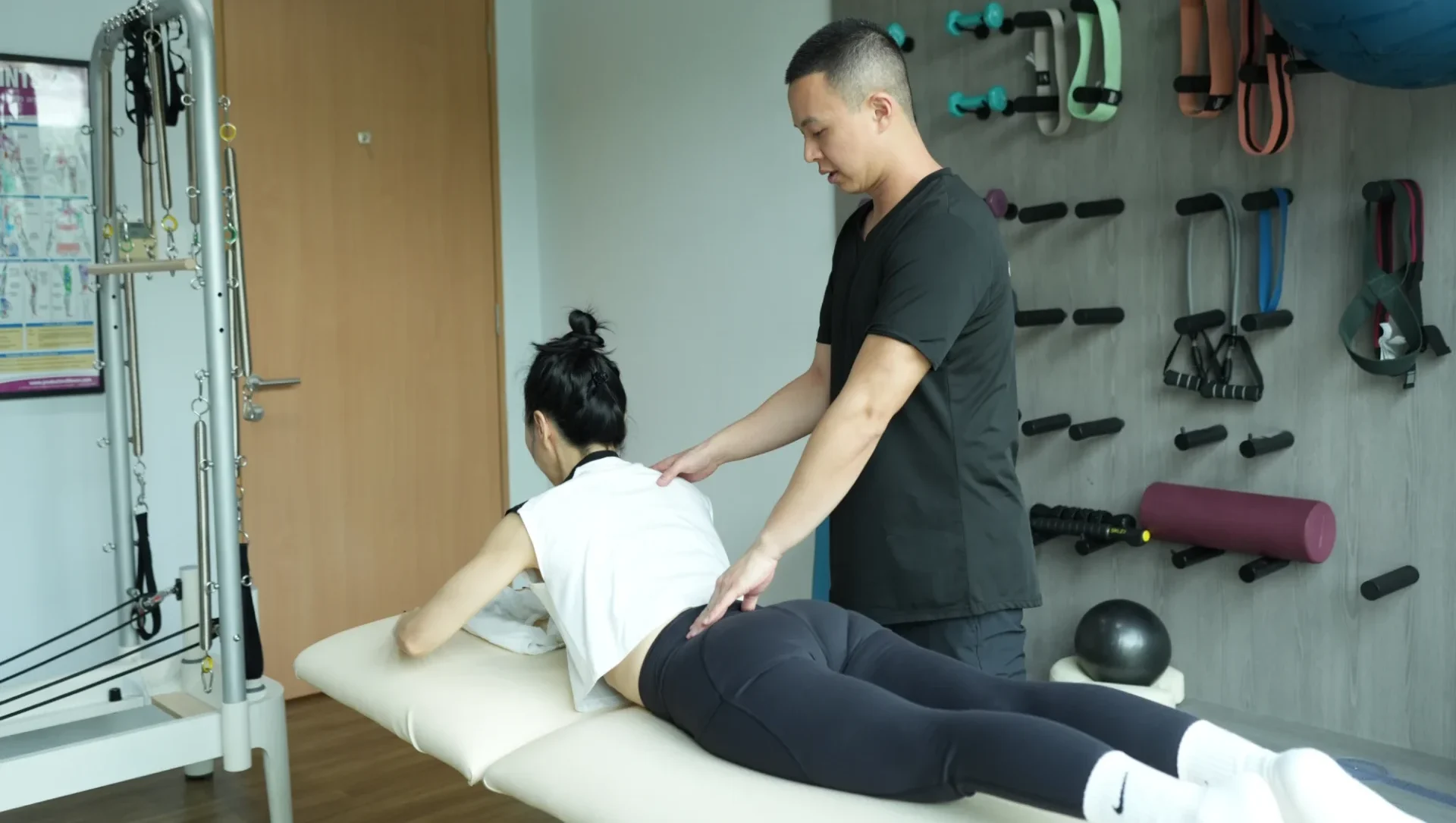
Sciatica Treatment in Singapore: Physiotherapy vs Surgery
Introduction: The Surgical Default Few musculoskeletal presentations are as alarming to the person experiencing them as sciatica. The pain begins in the lower back and runs down the leg, sometimes to the calf or the foot, with a sharp, electrical quality that is different from any other pain the person has felt before. It can […]

What Is VO2 Max, and Why Is It One of the Strongest Predictors of How Long You Will Live
his article is general health education. It is not a substitute for individual medical advice. If you have a heart condition, other medical conditions, or symptoms such as chest pain or breathlessness on exertion, please speak to a doctor before starting vigorous exercise. Ask most people which number best predicts how long they will live, […]

The Plateau Loop: How People Accidentally Maintain Instead of Progress
You train three times a week. You rarely miss a session. You leave tired, often sweaty, with the quiet satisfaction of having done the work. And yet, six months on, the weights on the bar are the same, the mirror looks the same, and the numbers that matter have barely moved. This is one of […]

Why Meal Prep Is the Single Most Effective Habit for Eating Healthily
Most people who struggle to eat consistently well are not confused about what healthy eating looks like. They know that vegetables matter, that protein is important, that ultra-processed food is not serving them. The knowledge is not the problem. The problem is that knowing what to eat and having it ready when you need it […]
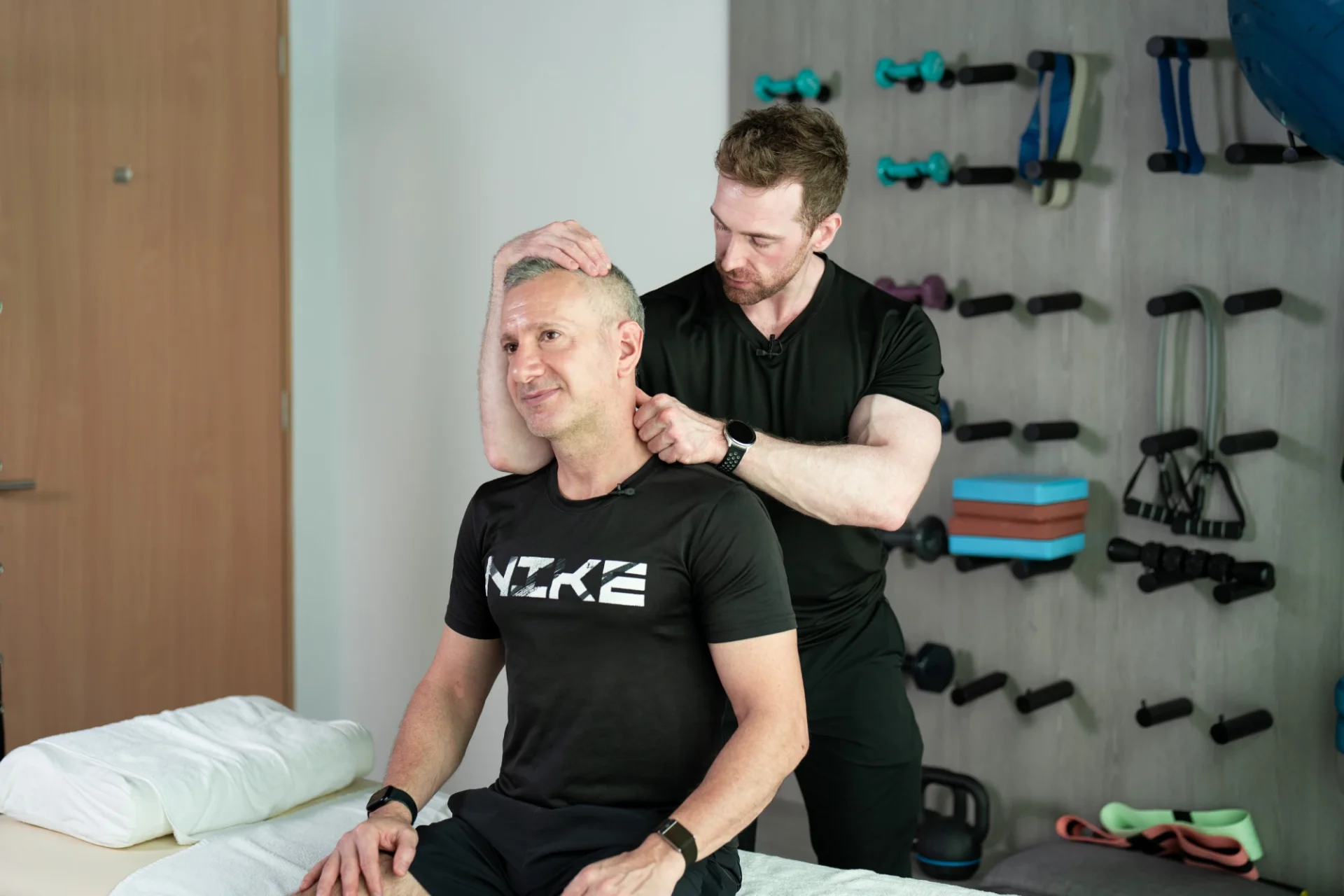
Why Your Headaches Might Be Coming From Your Neck: How Physiotherapy Treats Cervicogenic Headaches
Introduction: The Misrouted Signal Most people who get frequent headaches have a theory about what is causing them. Screen time. Stress. Dehydration. Poor sleep. Migraine. What is far less commonly considered, and far less commonly assessed, is the neck. A significant proportion of recurring headaches do not originate in the head at all. They originate […]

Vitamin D Deficiency in Singapore: Why It’s More Common Than You Think
Introduction: The Sunshine Paradox Singapore sits one degree and seventeen minutes north of the equator. The sun passes near-vertically overhead year-round. UV index readings regularly reach extreme levels. By every climatic measure, this is one of the better locations on earth for producing vitamin D in human skin, which is how most of the vitamin […]

Lifting Weights After 50: Why It Is the Most Important Thing You Can Do for Longevity
The most consequential lifestyle decision available to an adult over 50 is not a supplement, a diet framework, or a wellness protocol. It is whether they lift weights. The evidence supporting this claim is not fringe. It is drawn from large longitudinal studies, systematic reviews, and clinical guidelines from the major sports medicine and geriatric […]

Healthy Food Delivery in Singapore: Why What You Eat Between Sessions Matters
You train consistently. You show up. You put in the work. But if the meals between sessions are undoing the effort you put in at the gym, progress will stall regardless of how well-structured your programme is. This is one of the most common gaps in the health journeys of high-performing professionals in Singapore. Time […]
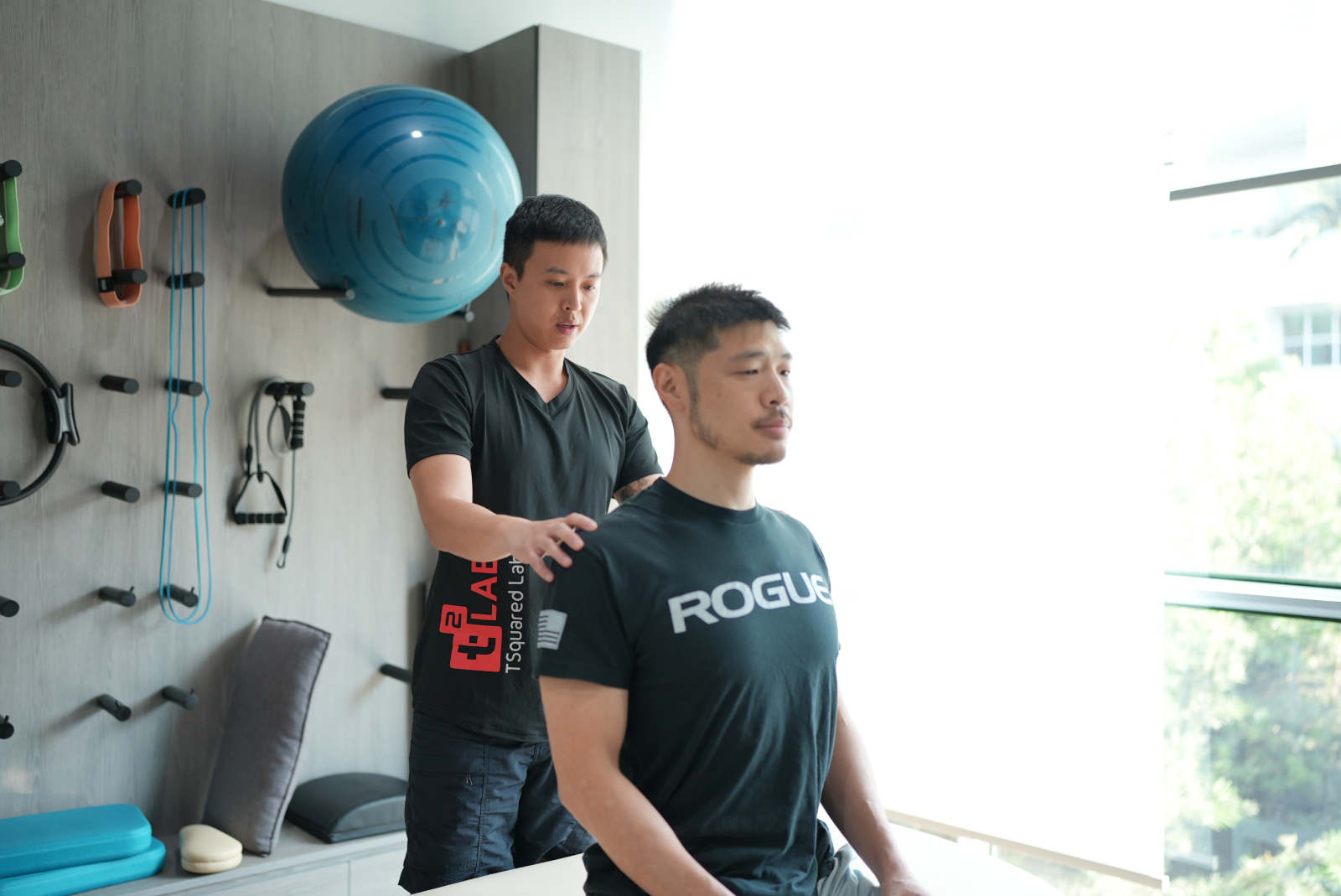
Slipped Disc in Singapore: Symptoms, Recovery, and When to See a Physio
Quick answer: Recovery timelines vary, but for most people symptoms ease meaningfully within 2 to 6 weeks, they are back to most work and daily activities by 6 to 12 weeks, and full function returns after about 12 weeks. Bed rest is not recommended. Gentle movement and progressive loading guided by a physiotherapist is the […]

What Your HbA1c Result Actually Means and What Doctors Don’t Always Tell You
HbA1c is one of the most widely measured and most consistently misinterpreted metabolic markers in clinical practice. It appears on almost every standard health screening panel. It is used as the primary criterion for diagnosing type 2 diabetes and prediabetes. And it is one of the few metabolic markers most patients receive with a number […]


Don't miss out on all the
recent content and news!
Don't miss out on all the
recent
content and news!
Subscribe to our newsletter today and stay up-to-date on all the latest happenings.
Don't miss out on all the recent content and news!
Subscribe to our newsletter today and stay up-to-date on all the latest happenings.
 by
EngageBay

Our Locations
991F Alexandra Rd, Singapore 119974
Nearest MRT: Labrador Park
Phone: +65 8891 8313
Phone: +65 6970 8510
Email: hello@tsquaredlab.com
OPENING HOURS
Monday: 6 am–9 pm
Tuesday: 6 am–9 pm
Wednesday: 6 am–9 pm
Thursday: 6 am–9 pm
Friday: 6 am–9 pm
Saturday: 6 am–4 pm
Sunday: Closed
30 Raffles Pl, #22-01, Singapore 048622
Nearest MRT: Raffles Place
Phone: +65 8381 6718
Phone: +65 6518 4669
Email: raffles@tsquaredlab.com
OPENING HOURS
Monday: 6 am–9 pm
Tuesday: 6 am–9 pm
Wednesday: 6 am–9 pm
Thursday: 6 am–9 pm
Friday: 6 am–9 pm
Saturday: 6 am–4 pm
Sunday: Closed


