

Julian’s Journey at TSquared Lab


Julian’s Journey at TSquared Lab
At just 18, our client Julian had already been fencing for nearly 10 years and had represented Hong
Kong on both junior and senior national teams for 4 of them. His journey in the sport began in
primary school and has since evolved into something much more serious.
The connection between Julian and our Coach Dimitar was obvious, the kind that forms from hours of
focused training and shared goals.
Julian's fencing journey had always been consistent, but it wasn’t until he began representing Hong
Kong that he realised something was missing. He had never taken strength and conditioning seriously
in his early years. "Before, I didn't really care about physical training. It was just fencing,
fencing, fencing," he admitted. But as the level of competition increased, so did the need for a
better physical foundation.
"In junior and cadet, it's more skill-based," Julian reflected. "But once you get to the senior
level, everyone is fast, everyone is strong. I realised if I want to compete at that level, I need
to work on my strength." That realisation became a pivotal moment, driving him to seek out a more
structured training regimen.
Julian's first exposure to TSquared Lab came through his sister, who was training there before him.
She recommended it, saying the coaches knew what they were doing. Julian started with a trial
session to test the waters. "I did a trial session, and it was quite interesting," he said. "It was
different. It felt like there was a long-term plan."
It wasn’t just about lifting weights or doing standard gym routines. He could feel the difference
from the very beginning. What stood out to him was the clear progression and structure, something he
hadn’t experienced in previous training. That structure helped Julian commit to the process more
seriously, understanding that each session had a purpose.
At just 18, our client Julian had already been fencing for nearly 10 years and had represented Hong Kong
on both junior and senior national teams for 4 of them. His journey in the sport began in primary school
and has since evolved into something much more serious.
The connection between Julian and our Coach Dimitar was obvious, the kind that forms from hours of
focused training and shared goals.
Julian has been fencing for almost 10 years and has been a part of the Hong Kong national fencing team for 4 of those years.
Julian recognised the importance of strength and conditioning once he reached senior competition levels, realising that skill alone wasn’t enough.
After joining TSquared Lab on his sister's recommendation, Julian benefited from a highly structured, sport-specific training program that helped elevate his fencing performance.
Julian's fencing journey had always been consistent, but it wasn’t until he began representing Hong Kong that he realised something was missing. He had never taken strength and conditioning seriously in his early years. "Before, I didn't really care about physical training. It was just fencing, fencing, fencing," he admitted. But as the level of competition increased, so did the need for a better physical foundation.
"In junior and cadet, it's more skill-based," Julian reflected. "But once you get to the senior level, everyone is fast, everyone is strong. I realised if I want to compete at that level, I need to work on my strength." That realisation became a pivotal moment, driving him to seek out a more structured training regimen.
Julian's first exposure to TSquared Lab came through his sister, who was training there before him. She recommended it, saying the coaches knew what they were doing. Julian started with a trial session to test the waters. "I did a trial session, and it was quite interesting," he said. "It was different. It felt like there was a long-term plan."
It wasn’t just about lifting weights or doing standard gym routines. He could feel the difference from the very beginning. What stood out to him was the clear progression and structure, something he hadn’t experienced in previous training. That structure helped Julian commit to the process more seriously, understanding that each session had a purpose.
Every training session has a purpose now. And with Dimitar’s help, I feel like I’m on the right track.”
Every training session has a purpose now. And with Dimitar’s help, I feel like I’m on the right track."
Julian has been fencing for almost 10 years and has been a part of the Hong Kong national fencing team for 4 of those years.
Julian recognised the importance of strength and conditioning once he reached senior competition levels, realising that skill alone wasn’t enough.
After joining TSquared Lab on his sister's recommendation, Julian benefited from a highly structured, sport-specific training program that helped elevate his fencing performance.
Dimitar explained his coaching philosophy with calm confidence. "The main goal was to understand the
demands of fencing, then see what Julian lacked and how we can bridge that gap," he said. He wasn’t just
throwing generic programs at Julian. Instead, he studied the sport, observed Julian’s fencing style, and
tailored a plan to help him become more explosive and confident.
"It’s not about getting Julian to lift the heaviest weights. It’s about efficiency and
performance," Dimitar explained. He wanted to make sure Julian was training in a way that directly
improved his fencing. "We focus on his strengths, manage his weaknesses, and ensure he stays
consistent."
Julian appreciated that approach. "The training sessions feel targeted. Not just random
exercises," he said. He started noticing improvements, not just physically but in how he approached
fencing.

After months of training with Dimitar, Julian began to see results. Not only did his body feel
stronger, but his movements on the piste became more efficient. "I’m faster, I recover better,
and I feel more stable when I fence," he shared.
Dimitar also noticed the change. "Julian is more confident in his physical abilities. He
understands his body better," he said. That self-awareness was key, especially in a sport as
quick and reactive as fencing.
"The biggest change for me," Julian added, "is that now I understand why I’m doing
certain exercises. I used to just follow what people told me. Now, I know what I’m working on."
As Julian continues his journey, his goals are clear. He wants to compete at the highest level
and knows that requires more than just skill with a sword. It requires a commitment to all
aspects of performance.
"I just want to keep improving," Julian said. "Every training session has a purpose now.
And with Dimitar’s help, I feel like I’m on the right track."
Dimitar nodded in agreement. “I must say that working with Julian was nothing but
blessed for me. Because we share a similar mindset that every session we're going to push for
0.001% to get better. And that's such a fulfilling, fulfilling thing for me as well, because we
both know in which direction we need to go and we just attack.”

Witness Julian improve at fencing, faster, sharper, stronger with every move.


Empower yourself with valuable resources related to training, nutrition, and well-being along with expert advice from world’s leading personal trainers helping you to address your unique fitness and health goals.

Introduction: The Perimenopausal Reset A woman in her mid-forties walks into a training consultation at TSquared Lab. She has trained consistently for most of her adult life. The routine that worked for a decade is still in place. The gym sessions are still happening three or four times a week. The nutritional discipline is still […]

Introduction: The Context Winner Principle A client walks into a nutrition consultation at TSquared Eats with a specific question. She has been reading nutrition content on social media, where cottage cheese has been enjoying one of its periodic revivals as a high-protein superfood. She has been eating Greek yoghurt every morning for years. She has […]

This article is general health information. It is not a substitute for an individual assessment, diagnosis, or treatment. If you have severe, worsening, or unexplained symptoms, please seek medical advice promptly. It is one of the first questions people ask, and it is a fair one. You are in pain, your time is limited, and […]

Introduction: The Ageing Gap Two adults walk into a longevity consultation on the same morning. Both are fifty years old by their identity cards. One has the cardiovascular markers, cognitive performance, muscle mass, inflammatory profile, and metabolic signatures of a healthy forty-year-old. The other has the markers of a sixty-year-old, with elevated inflammation, borderline insulin […]

Getting fit is not complicated in principle. Progressive loading, structured recovery, adequate protein, consistent effort across months and years. The outcome, if those inputs are in place, is predictable: a stronger, more capable body that accumulates physical capacity rather than eroding it. The gap between that version and what most people actually experience is not […]

There is a version of this story that is not true. It says that muscle loss after forty is simply a function of ageing, that the biology is fixed, and that the best anyone can do is slow the decline. The evidence does not support that framing. What the evidence does support is this: the […]

Most people use mobility and flexibility as though they mean the same thing. In physiotherapy, they do not. The distinction is clinically significant, and treating these three terms as synonyms leads to training approaches that produce either limited results or avoidable injury. This blog draws a clear line between mobility, flexibility, and stability, explains the […]

You receive a diagnosis of polycystic ovary syndrome. Your doctor confirms irregular cycles, elevated androgen levels on a basic panel, and perhaps the characteristic appearance on ultrasound. A standard blood test returns a normal fasting glucose. You are told your blood sugar is fine, and that managing PCOS is largely a matter of lifestyle. Six […]

Introduction: The Return Readiness Gap The question new mothers ask most often about returning to training is a question about timing. When can I start lifting again? When is it safe to run? When can I go back to the classes I was doing before? The question is understandable. After nine months of adapted training […]

Of all the things a nutritionist might nag you about, fibre is the quietest and the most overlooked. It is not a trendy macronutrient, it does not come with a supplement aisle of its own, and almost nobody tracks it the way they track protein or calories. Yet it is one of the few dietary […]
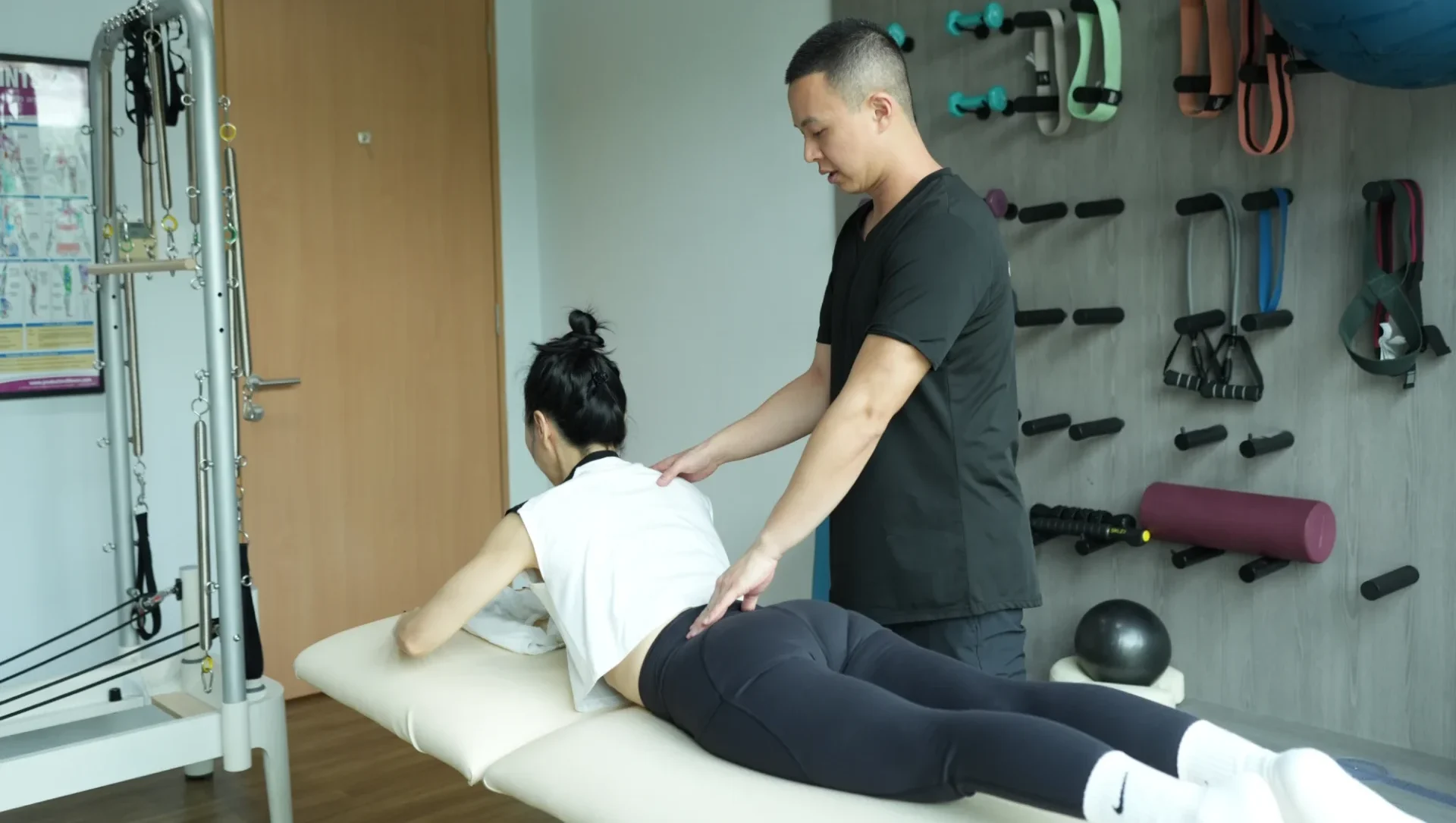
Introduction: The Surgical Default Few musculoskeletal presentations are as alarming to the person experiencing them as sciatica. The pain begins in the lower back and runs down the leg, sometimes to the calf or the foot, with a sharp, electrical quality that is different from any other pain the person has felt before. It can […]

his article is general health education. It is not a substitute for individual medical advice. If you have a heart condition, other medical conditions, or symptoms such as chest pain or breathlessness on exertion, please speak to a doctor before starting vigorous exercise. Ask most people which number best predicts how long they will live, […]

You train three times a week. You rarely miss a session. You leave tired, often sweaty, with the quiet satisfaction of having done the work. And yet, six months on, the weights on the bar are the same, the mirror looks the same, and the numbers that matter have barely moved. This is one of […]

Most people who struggle to eat consistently well are not confused about what healthy eating looks like. They know that vegetables matter, that protein is important, that ultra-processed food is not serving them. The knowledge is not the problem. The problem is that knowing what to eat and having it ready when you need it […]
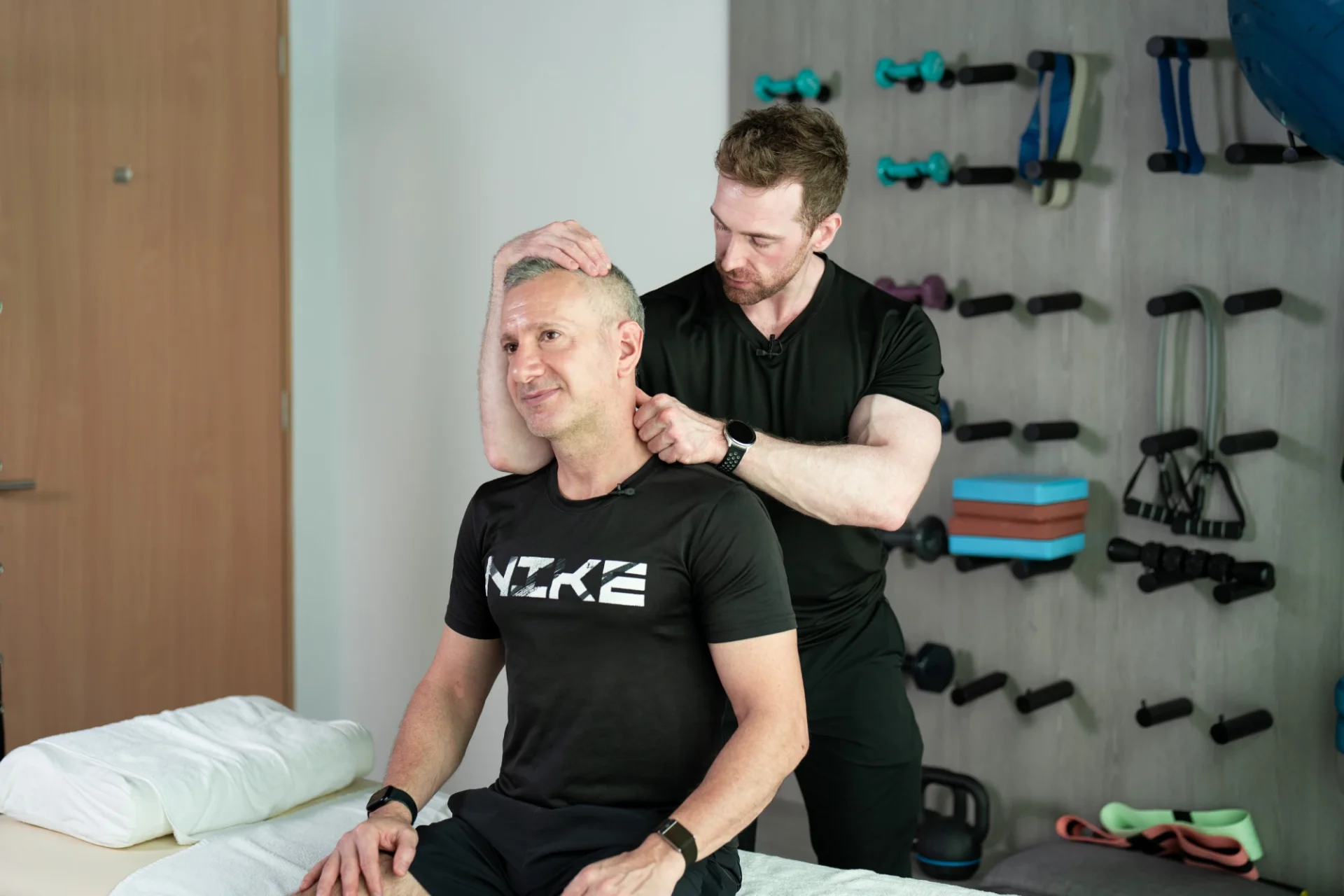
Introduction: The Misrouted Signal Most people who get frequent headaches have a theory about what is causing them. Screen time. Stress. Dehydration. Poor sleep. Migraine. What is far less commonly considered, and far less commonly assessed, is the neck. A significant proportion of recurring headaches do not originate in the head at all. They originate […]

Introduction: The Sunshine Paradox Singapore sits one degree and seventeen minutes north of the equator. The sun passes near-vertically overhead year-round. UV index readings regularly reach extreme levels. By every climatic measure, this is one of the better locations on earth for producing vitamin D in human skin, which is how most of the vitamin […]

The most consequential lifestyle decision available to an adult over 50 is not a supplement, a diet framework, or a wellness protocol. It is whether they lift weights. The evidence supporting this claim is not fringe. It is drawn from large longitudinal studies, systematic reviews, and clinical guidelines from the major sports medicine and geriatric […]

You train consistently. You show up. You put in the work. But if the meals between sessions are undoing the effort you put in at the gym, progress will stall regardless of how well-structured your programme is. This is one of the most common gaps in the health journeys of high-performing professionals in Singapore. Time […]
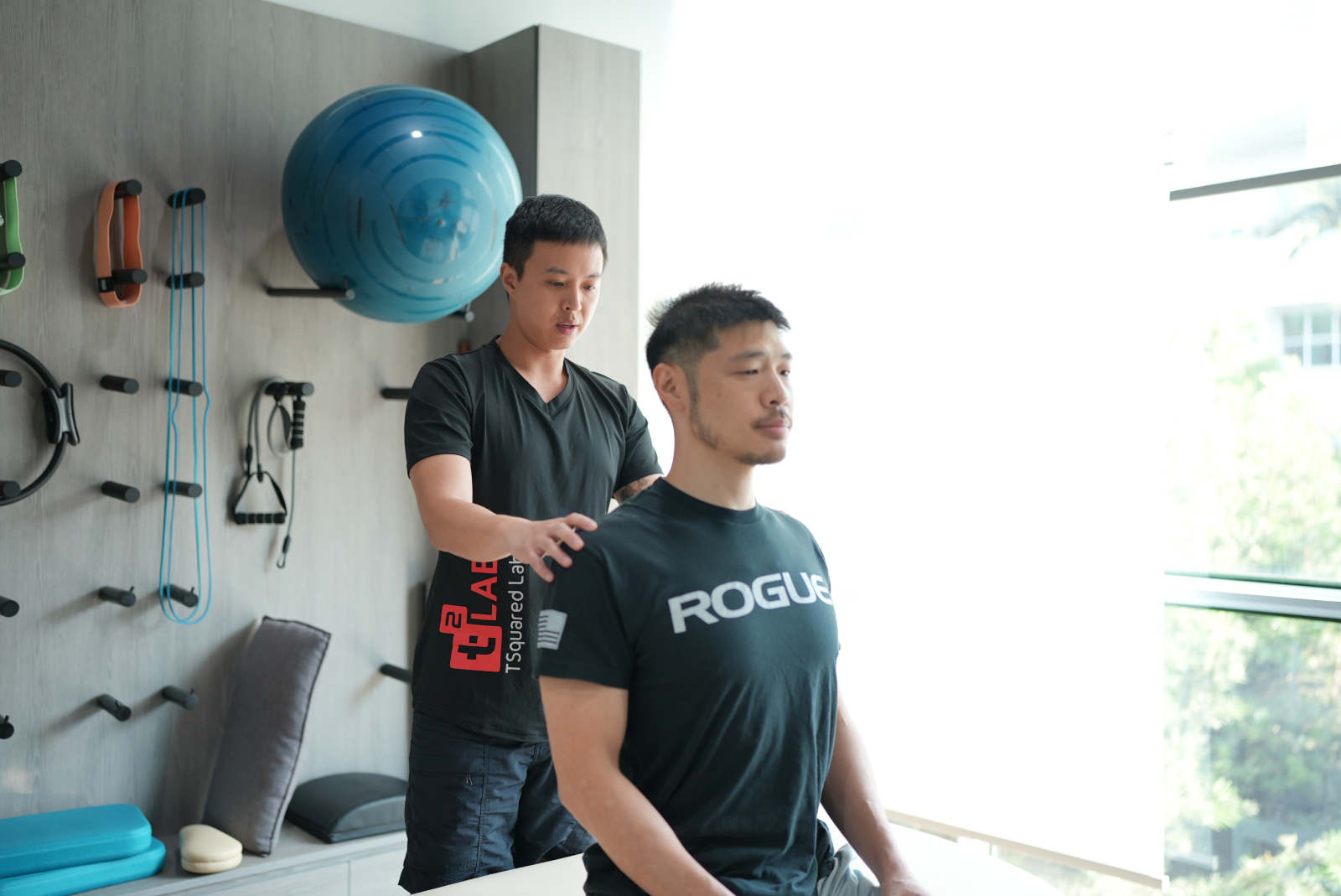
Quick answer: Recovery timelines vary, but for most people symptoms ease meaningfully within 2 to 6 weeks, they are back to most work and daily activities by 6 to 12 weeks, and full function returns after about 12 weeks. Bed rest is not recommended. Gentle movement and progressive loading guided by a physiotherapist is the […]

HbA1c is one of the most widely measured and most consistently misinterpreted metabolic markers in clinical practice. It appears on almost every standard health screening panel. It is used as the primary criterion for diagnosing type 2 diabetes and prediabetes. And it is one of the few metabolic markers most patients receive with a number […]


Subscribe to our newsletter today and stay up-to-date on all the latest happenings.
Subscribe to our newsletter today and stay up-to-date on all the latest happenings.
 by
EngageBay

991F Alexandra Rd, Singapore 119974
Nearest MRT: Labrador Park
Phone: +65 8891 8313
Phone: +65 6970 8510
Email: hello@tsquaredlab.com
Monday: 6 am–9 pm
Tuesday: 6 am–9 pm
Wednesday: 6 am–9 pm
Thursday: 6 am–9 pm
Friday: 6 am–9 pm
Saturday: 6 am–4 pm
Sunday: Closed
30 Raffles Pl, #22-01, Singapore 048622
Nearest MRT: Raffles Place
Phone: +65 8381 6718
Phone: +65 6518 4669
Email: raffles@tsquaredlab.com
Monday: 6 am–9 pm
Tuesday: 6 am–9 pm
Wednesday: 6 am–9 pm
Thursday: 6 am–9 pm
Friday: 6 am–9 pm
Saturday: 6 am–4 pm
Sunday: Closed


