

Magnus’s Journey at TSquared Lab


Magnus’s Journey at TSquared Lab
Magnus came to TSquared Lab after years of being active but feeling stuck. He’d been doing dragonboat for months and training on his own, yet instead of getting stronger he found himself “growing a lot fatter.” The mirror showed a body that didn’t match his effort: a merging jawline, a stubborn belly, and the disconnect between activity and results was finally impossible to ignore.
Starting the program forced Magnus to confront messy habits. “My knowledge for dieting and working out was very, very poor, and I was also not very sure about how to do it safely,” he admits. He describes earlier routines driven by impulse and emotion: skipping meals, bingeing, and assuming that more activity would solve everything. That confusion extended to training form and balance; one side of his body was noticeably stronger than the other, and his technique was poor. He recalls being asked to demonstrate lifts and realising, bluntly, “the form and everything is off.”
Magnus realised the problem wasn’t activity alone; it was how he trained and ate. He joined TSquared seeking clarity and structure: to separate cardio from resistance work, to learn what real strength-building looks like, and to fix the gaps in his nutrition. Coach Dwayne helped him see that dragon boating alone wouldn’t automatically make him stronger; there was important work to be done off the water.
“I started the Dragonball thing, but then, throughout the first six months I realised that I was not getting any stronger or any better,” he says. “I think my diet was a mess; my workout was a mess. So, yeah, all these factors combined together, plus my appearance. Right? I started gaining weight and then I realised that I needed help.”
A year ago, Magnus committed to change. Today, he’s 8 kg lighter, 6% leaner, and performing better than ever.
He also regained confidence and stamina; friends, family, and teammates began to notice improvements in strength and endurance.
The visible changes were matched by functional wins: less pain, better posture, and improved rowing performance.
Coach Dwayne prioritised technique and thoughtful progression. Instead of chasing heavy loads right away, he focused on form-first programing and unilateral work to correct imbalances: “We had to start doing unilateral movements, one-arm dumbbell rows, so that his stronger side wouldn’t overpower the weaker one.”
Nutrition coaching was equally direct. Magnus learned that bulking without control only adds fat and that real muscle comes from consistency and precision: “It really took a lot of discipline, and I had to give up a lot of things like eating with family and friends. I couldn't eat. Basically, if the food is not prepared by myself, I could not eat it.”
Within months, the small, consistent changes began to compound. Magnus moved from guessing his workouts to following progressive, intentional sessions. He started to understand pre-workout and post-workout nutrition and the difference between simple and complex carbs for effective exercise fuel. He recalls a turning point in training when heavier weights were quietly loaded onto the bar, and after three sets, he realised he’d just hit a new personal best. That moment proved the process worked: “I probably can do it and push myself.”
So when I look at myself in the mirror, it's very pleasing to know that I have in the past one year done a lot of work. And then the results are still there. And I'm also not going overboard."
So when I look at myself in the mirror, it's very pleasing to know that I have in the past one year done a lot of work. And then the results are still there. And I'm also not going overboard.
A year ago, Magnus committed to change. Today, he’s 8 kg lighter, 6% leaner, and performing better than ever.
He also regained confidence and stamina; friends, family, and teammates began to notice improvements in strength and endurance.
The visible changes were matched by functional wins: less pain, better posture, and improved rowing performance.
Coach Dwayne prioritised technique and thoughtful progression. Instead of chasing heavy loads right away, he focused on form-first programing and unilateral work to correct imbalances: “We had to start doing unilateral movements, one-arm dumbbell rows, so that his stronger side wouldn’t overpower the weaker one.”
Nutrition coaching was equally direct. Magnus learned that bulking without control only adds fat and that real muscle comes from consistency and precision: “It really took a lot of discipline, and I had to give up a lot of things like eating with family and friends. I couldn't eat. Basically, if the food is not prepared by myself, I could not eat it.”
Within months, the small, consistent changes began to compound. Magnus moved from guessing his workouts to following progressive, intentional sessions. He started to understand pre-workout and post-workout nutrition and the difference between simple and complex carbs for effective exercise fuel. He recalls a turning point in training when heavier weights were quietly loaded onto the bar, and after three sets, he realised he’d just hit a new personal best. That moment proved the process worked: “I probably can do it and push myself.”
8 kg
6%
8 kg
6%

The results were tangible. Magnus reports meaningful body composition changes and improved performance: “When I first joined them last year in June, I was around 66 kgs; right now my current weight is somewhere between 57 and 58. And body fat, last we checked, was about 15%.” He also regained confidence and stamina; friends, family, and teammates began to notice improvements in strength and endurance. The visible changes were matched by functional wins: less pain, better posture, and improved rowing performance.
Beyond numbers, Magnus says the program taught him life skills: cooking, consistency, and a healthier relationship with food. The journey reshaped his mindset: “The process is more important; if I can get to a halfway point, that means somewhere in the future I can definitely get to point B.” He learned to trust measured progress, not quick fixes, and to value controlled, intelligent training over reckless load chasing.

Witness how Magnus turned self-doubt into strength and discipline into lasting confidence.


Empower yourself with valuable resources related to training, nutrition, and well-being along with expert advice from world’s leading personal trainers helping you to address your unique fitness and health goals.

Introduction: The Perimenopausal Reset A woman in her mid-forties walks into a training consultation at TSquared Lab. She has trained consistently for most of her adult life. The routine that worked for a decade is still in place. The gym sessions are still happening three or four times a week. The nutritional discipline is still […]

Introduction: The Context Winner Principle A client walks into a nutrition consultation at TSquared Eats with a specific question. She has been reading nutrition content on social media, where cottage cheese has been enjoying one of its periodic revivals as a high-protein superfood. She has been eating Greek yoghurt every morning for years. She has […]

This article is general health information. It is not a substitute for an individual assessment, diagnosis, or treatment. If you have severe, worsening, or unexplained symptoms, please seek medical advice promptly. It is one of the first questions people ask, and it is a fair one. You are in pain, your time is limited, and […]

Introduction: The Ageing Gap Two adults walk into a longevity consultation on the same morning. Both are fifty years old by their identity cards. One has the cardiovascular markers, cognitive performance, muscle mass, inflammatory profile, and metabolic signatures of a healthy forty-year-old. The other has the markers of a sixty-year-old, with elevated inflammation, borderline insulin […]

Getting fit is not complicated in principle. Progressive loading, structured recovery, adequate protein, consistent effort across months and years. The outcome, if those inputs are in place, is predictable: a stronger, more capable body that accumulates physical capacity rather than eroding it. The gap between that version and what most people actually experience is not […]

There is a version of this story that is not true. It says that muscle loss after forty is simply a function of ageing, that the biology is fixed, and that the best anyone can do is slow the decline. The evidence does not support that framing. What the evidence does support is this: the […]

Most people use mobility and flexibility as though they mean the same thing. In physiotherapy, they do not. The distinction is clinically significant, and treating these three terms as synonyms leads to training approaches that produce either limited results or avoidable injury. This blog draws a clear line between mobility, flexibility, and stability, explains the […]

You receive a diagnosis of polycystic ovary syndrome. Your doctor confirms irregular cycles, elevated androgen levels on a basic panel, and perhaps the characteristic appearance on ultrasound. A standard blood test returns a normal fasting glucose. You are told your blood sugar is fine, and that managing PCOS is largely a matter of lifestyle. Six […]

Introduction: The Return Readiness Gap The question new mothers ask most often about returning to training is a question about timing. When can I start lifting again? When is it safe to run? When can I go back to the classes I was doing before? The question is understandable. After nine months of adapted training […]

Of all the things a nutritionist might nag you about, fibre is the quietest and the most overlooked. It is not a trendy macronutrient, it does not come with a supplement aisle of its own, and almost nobody tracks it the way they track protein or calories. Yet it is one of the few dietary […]
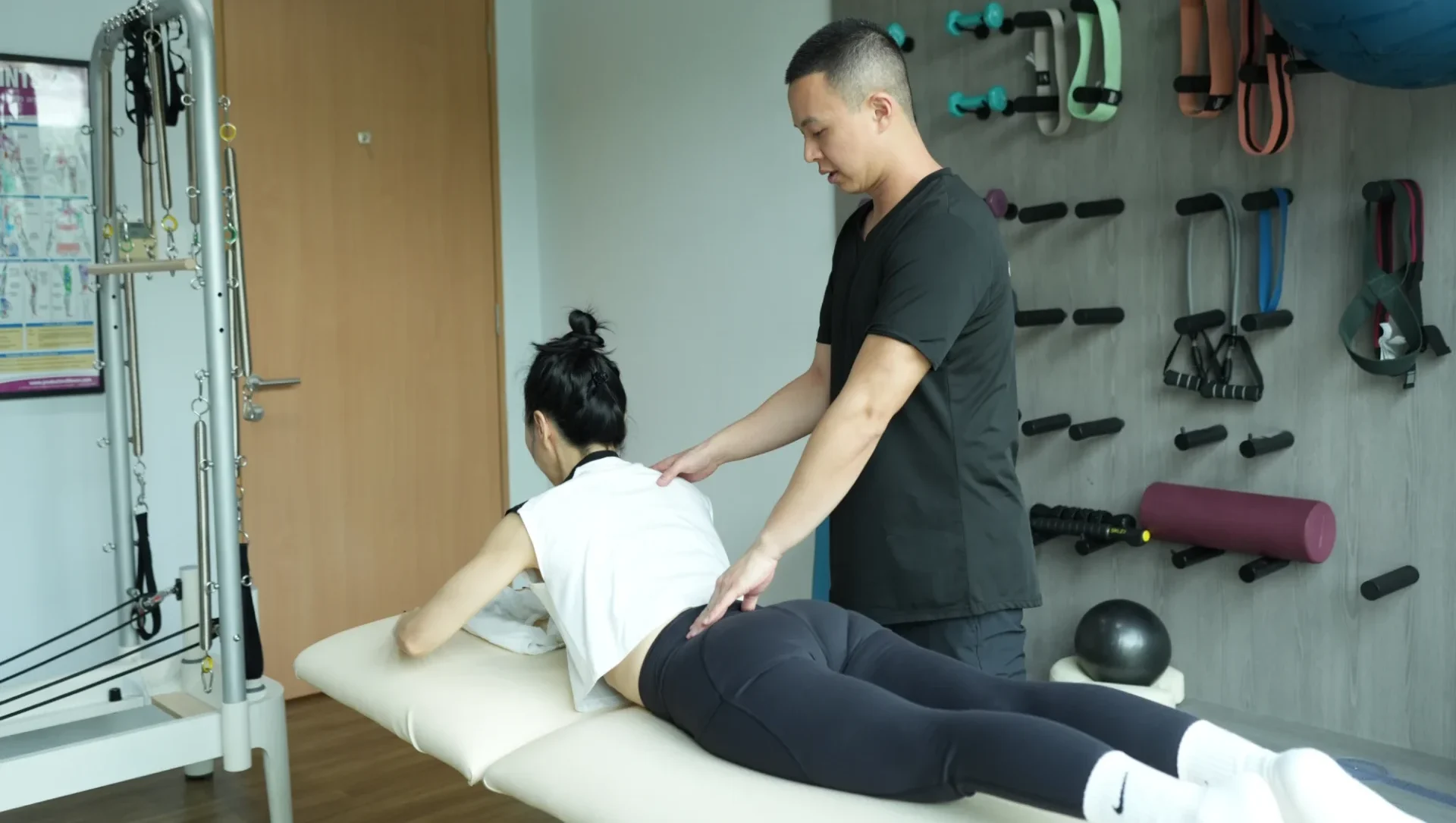
Introduction: The Surgical Default Few musculoskeletal presentations are as alarming to the person experiencing them as sciatica. The pain begins in the lower back and runs down the leg, sometimes to the calf or the foot, with a sharp, electrical quality that is different from any other pain the person has felt before. It can […]

his article is general health education. It is not a substitute for individual medical advice. If you have a heart condition, other medical conditions, or symptoms such as chest pain or breathlessness on exertion, please speak to a doctor before starting vigorous exercise. Ask most people which number best predicts how long they will live, […]

You train three times a week. You rarely miss a session. You leave tired, often sweaty, with the quiet satisfaction of having done the work. And yet, six months on, the weights on the bar are the same, the mirror looks the same, and the numbers that matter have barely moved. This is one of […]

Most people who struggle to eat consistently well are not confused about what healthy eating looks like. They know that vegetables matter, that protein is important, that ultra-processed food is not serving them. The knowledge is not the problem. The problem is that knowing what to eat and having it ready when you need it […]
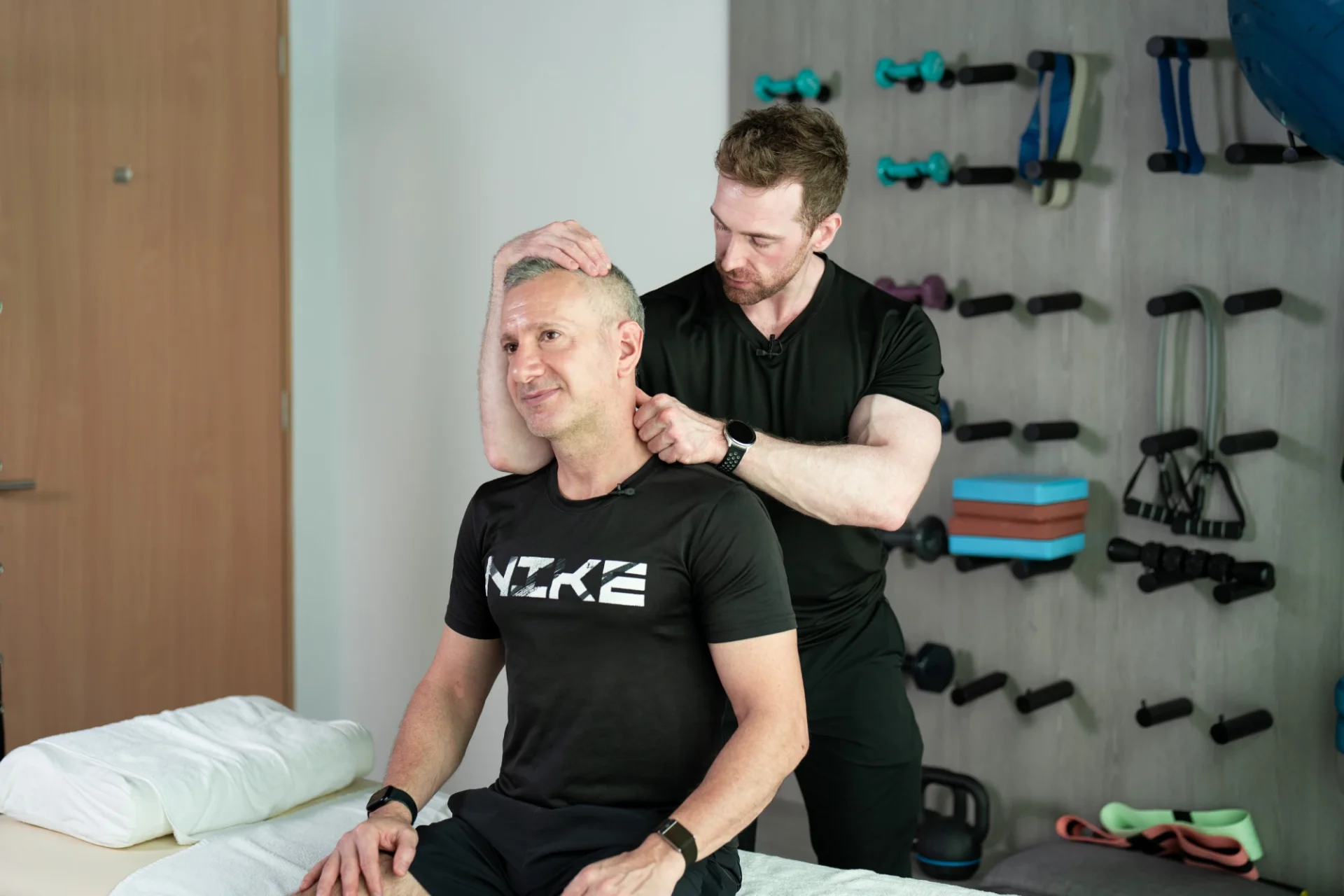
Introduction: The Misrouted Signal Most people who get frequent headaches have a theory about what is causing them. Screen time. Stress. Dehydration. Poor sleep. Migraine. What is far less commonly considered, and far less commonly assessed, is the neck. A significant proportion of recurring headaches do not originate in the head at all. They originate […]

Introduction: The Sunshine Paradox Singapore sits one degree and seventeen minutes north of the equator. The sun passes near-vertically overhead year-round. UV index readings regularly reach extreme levels. By every climatic measure, this is one of the better locations on earth for producing vitamin D in human skin, which is how most of the vitamin […]

The most consequential lifestyle decision available to an adult over 50 is not a supplement, a diet framework, or a wellness protocol. It is whether they lift weights. The evidence supporting this claim is not fringe. It is drawn from large longitudinal studies, systematic reviews, and clinical guidelines from the major sports medicine and geriatric […]

You train consistently. You show up. You put in the work. But if the meals between sessions are undoing the effort you put in at the gym, progress will stall regardless of how well-structured your programme is. This is one of the most common gaps in the health journeys of high-performing professionals in Singapore. Time […]
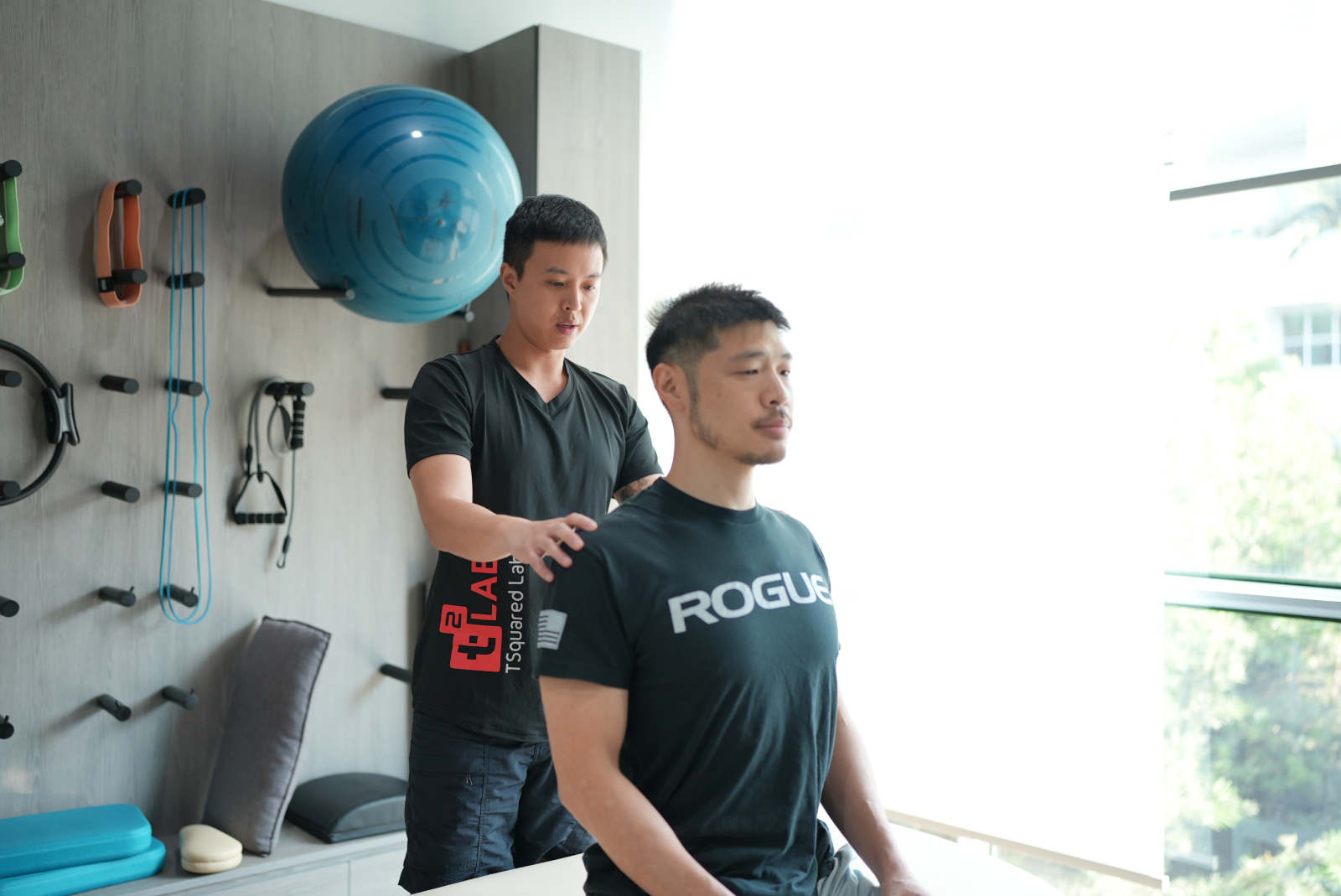
Quick answer: Recovery timelines vary, but for most people symptoms ease meaningfully within 2 to 6 weeks, they are back to most work and daily activities by 6 to 12 weeks, and full function returns after about 12 weeks. Bed rest is not recommended. Gentle movement and progressive loading guided by a physiotherapist is the […]

HbA1c is one of the most widely measured and most consistently misinterpreted metabolic markers in clinical practice. It appears on almost every standard health screening panel. It is used as the primary criterion for diagnosing type 2 diabetes and prediabetes. And it is one of the few metabolic markers most patients receive with a number […]


Subscribe to our newsletter today and stay up-to-date on all the latest happenings.
Subscribe to our newsletter today and stay up-to-date on all the latest happenings.
 by
EngageBay

991F Alexandra Rd, Singapore 119974
Nearest MRT: Labrador Park
Phone: +65 8891 8313
Phone: +65 6970 8510
Email: hello@tsquaredlab.com
Monday: 6 am–9 pm
Tuesday: 6 am–9 pm
Wednesday: 6 am–9 pm
Thursday: 6 am–9 pm
Friday: 6 am–9 pm
Saturday: 6 am–4 pm
Sunday: Closed
30 Raffles Pl, #22-01, Singapore 048622
Nearest MRT: Raffles Place
Phone: +65 8381 6718
Phone: +65 6518 4669
Email: raffles@tsquaredlab.com
Monday: 6 am–9 pm
Tuesday: 6 am–9 pm
Wednesday: 6 am–9 pm
Thursday: 6 am–9 pm
Friday: 6 am–9 pm
Saturday: 6 am–4 pm
Sunday: Closed


